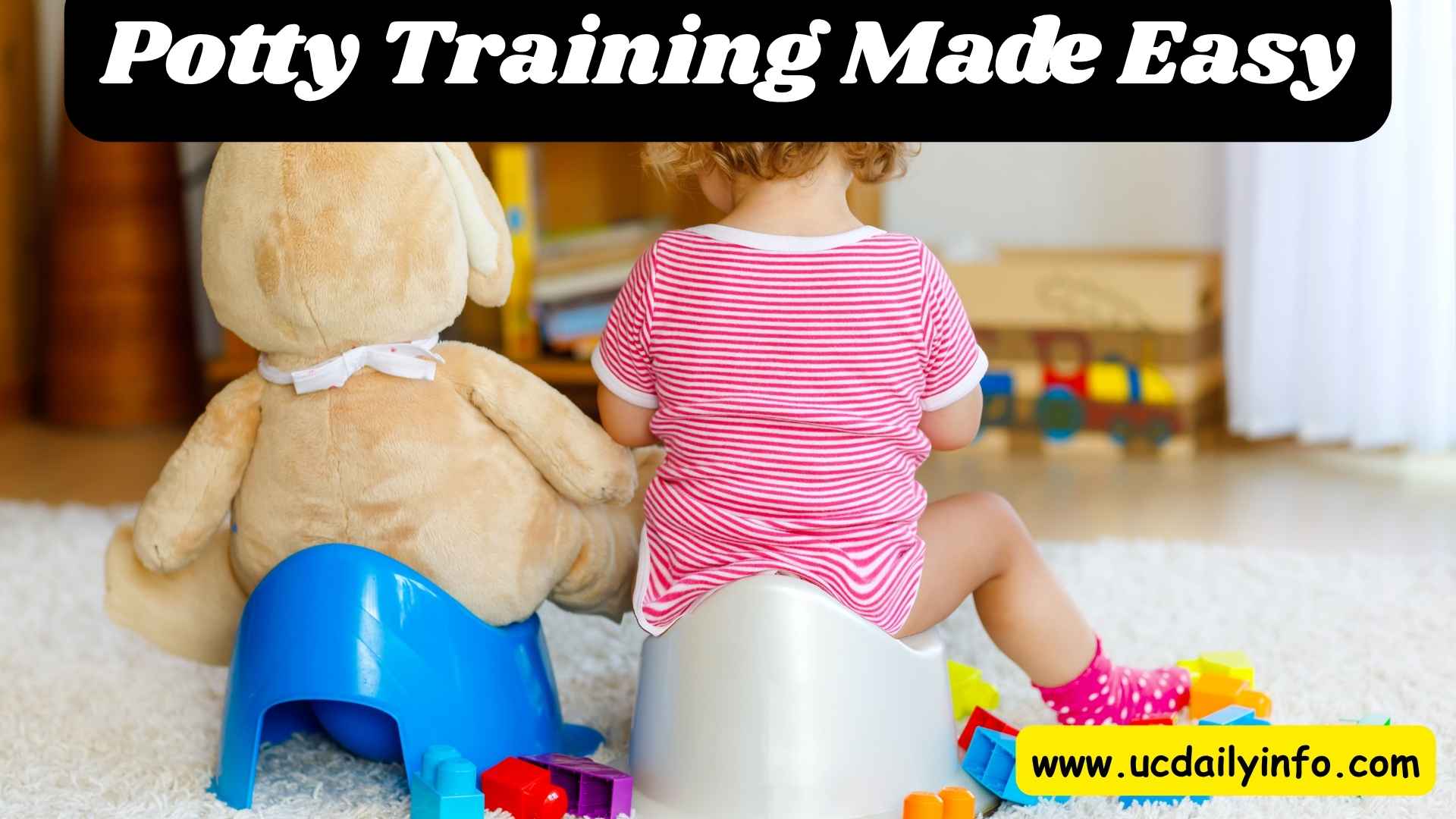
Potty Training Made Easy: 8 Practical Tips That Actually Work
Potty Training Made Easy: 8 Practical Tips That Actually Work
Potty training is one of those major toddler milestones that can bring excitement, relief, and a surprising amount of frustration.
One day, your child may seem completely ready to leave diapers behind. The next day, they may refuse to sit on the potty, have an accident five minutes after using the toilet, or suddenly decide that wearing underwear is absolutely unacceptable.
If this sounds familiar, you are not alone.
Potty training made easy does not mean your toddler will learn everything overnight. Instead, it means creating a calm, predictable environment where your child can learn without unnecessary pressure.
Every child develops differently. Some toddlers catch on quickly, while others need more time to recognize when they need to go, communicate their needs, and become comfortable using the toilet.
The good news is that you can make the process much smoother.
In this guide, we will cover 8 practical potty training tips that actually work, including how to recognize readiness, create a routine, choose helpful potty-training tools, deal with accidents, handle outings, and encourage your toddler without turning every bathroom trip into a battle.
When Should You Start Potty Training?
There is no magic age when every child should start potty training.
Many children begin somewhere between 18 months and 3 years old, but age alone should not determine whether your toddler is ready. Physical, emotional, and communication skills are often more important than reaching a particular birthday.
Look for signs that your child is becoming interested in the bathroom or aware of their own bathroom habits.
Signs Your Toddler May Be Ready
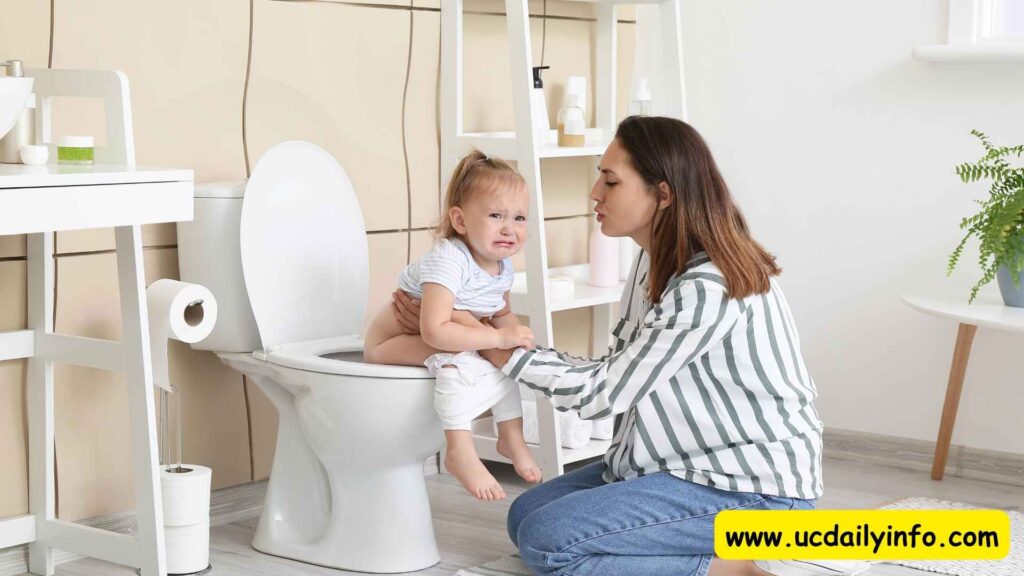
Your child may be ready to begin when they:
- Stay dry for longer periods during the day.
- Tell you when they have peed or pooped.
- Show interest in the toilet.
- Want to wear underwear.
- Follow simple instructions.
- Pull their pants up or down with some help.
- Hide when they need to poop.
- Become uncomfortable when their diaper is dirty.
- Tell you before they need to use the bathroom.
- Show interest in what parents or older siblings are doing in the bathroom.
You don’t need to see every sign before starting. However, if your toddler shows little interest and strongly resists every attempt, it may be better to slow down rather than force the process.
Consider What’s Happening at Home
Timing matters too.
If your family is moving, your child has just started daycare, you’re welcoming a new baby, or there has been another major change, potty training may be more difficult.
Whenever possible, choose a relatively calm period when you can maintain a consistent routine.
8 Potty Training Tips That Actually Work
There is no single method that works for every toddler. However, these practical strategies can make the learning process easier and less stressful.
1. Create a Simple and Predictable Potty Routine
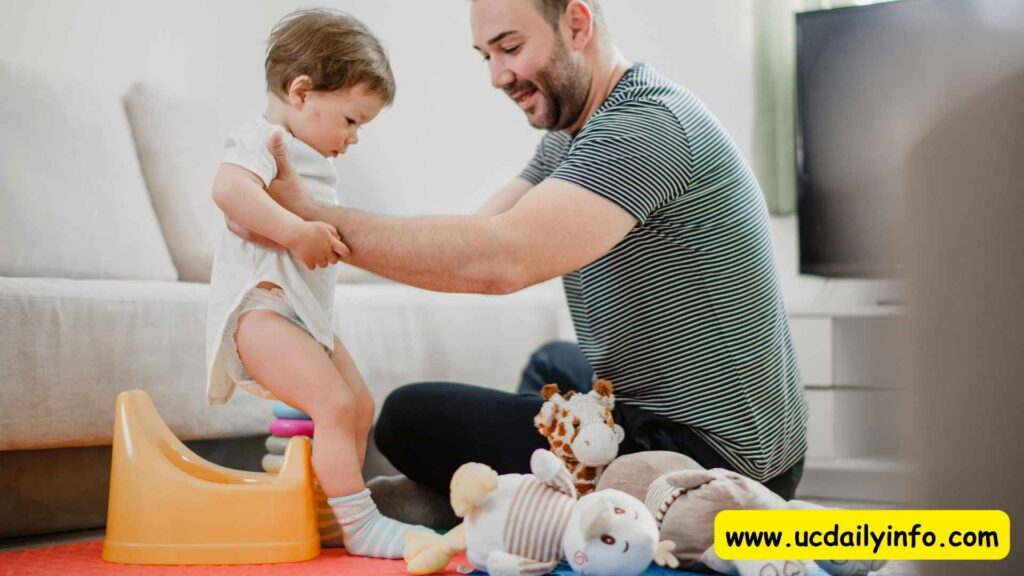
Toddlers generally respond well to routines because predictable activities help them understand what comes next.
Instead of constantly asking, “Do you need to use the potty?” establish a few regular potty opportunities throughout the day.
You could try sitting on the potty:
- After waking up.
- Before leaving the house.
- After meals.
- Before nap time.
- Before bath time.
- Before bedtime.
Keep these bathroom visits short and relaxed.
If your child doesn’t need to go, don’t force them to sit for a long time. The goal is to create familiarity rather than pressure.
You can make the routine more enjoyable by reading a short potty-training book, singing a simple song, or using a sticker chart.
Over time, your toddler can begin recognizing the routine and eventually learn to tell you when they need to go.
2. Choose the Right Potty Training Equipment
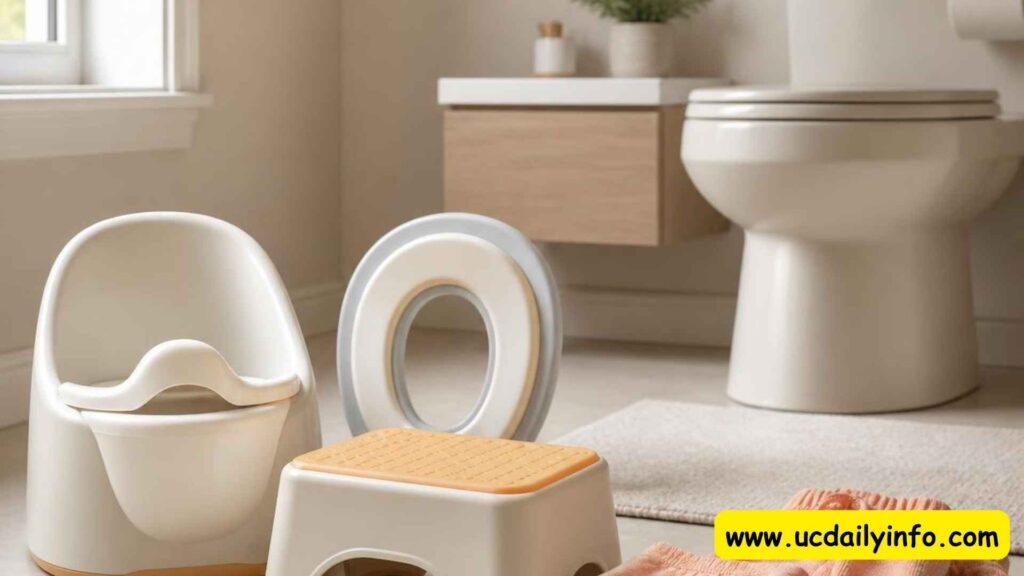
You don’t need a bathroom full of expensive products to potty train successfully, but the right equipment can make things easier.
Some toddlers feel more comfortable starting with a stand-alone potty chair because their feet can touch the floor and the toilet feels less intimidating.
Other children prefer using the regular toilet with a toddler toilet-seat reducer.
A sturdy step stool can help your child reach the toilet, sink, and toilet paper independently.
Useful potty-training supplies include:
- Toddler potty chair.
- Toilet-seat reducer.
- Stable step stool.
- Comfortable underwear.
- Elastic-waist pants.
- Unscented wipes.
- Extra clothes.
- Small cleanup bags.
- Potty-training books.
- Sticker chart.
When choosing products, prioritize safety, stability, comfort, and ease of cleaning.
For parents looking for a dedicated potty-training setup, a toddler potty chair or toilet-seat reducer can be a useful investment.
3. Encourage Your Child Instead of Pressuring Them
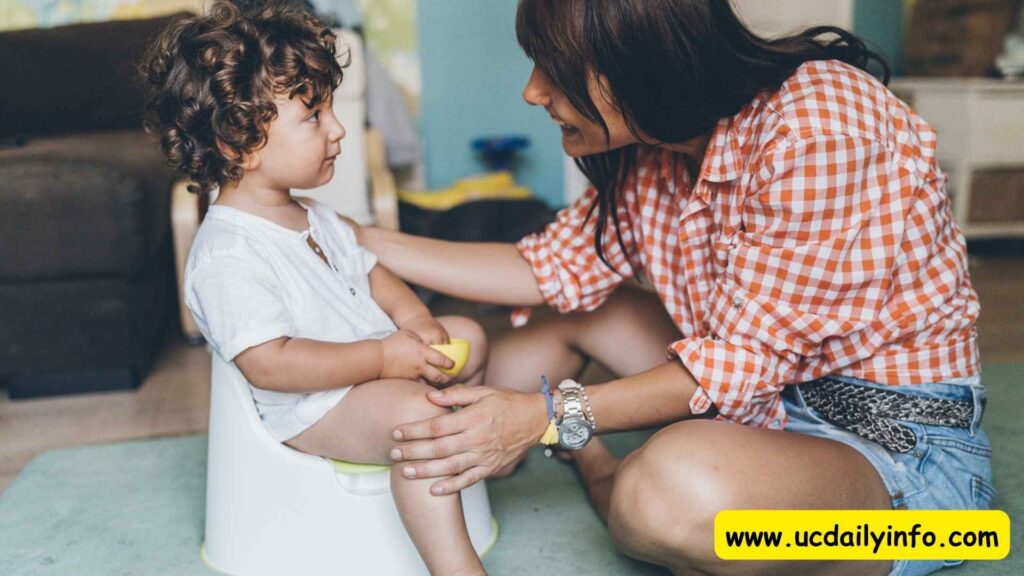
One of the biggest mistakes parents can make is turning potty training into a power struggle.
Your toddler may not use the potty every time you ask. They may sit down and do nothing. They may even have an accident immediately afterward.
Try not to react with frustration.
Instead, praise effort.
You can say:
“Great job trying!”
“You remembered to sit on the potty.”
“You’re learning!”
“Let’s try again next time.”
The goal is to help your child associate the potty with positive experiences.
Should You Use Rewards?
Some families use sticker charts or small rewards to encourage progress.
For example, your child could receive a sticker for:
- Sitting on the potty.
- Telling you they need to go.
- Successfully using the toilet.
- Washing their hands afterward.
Rewards aren’t required, though. Some children respond better to praise, encouragement, and the satisfaction of becoming more independent.
Avoid making rewards so important that your child becomes upset when they don’t receive one.
4. Make Potty Training Part of Everyday Life
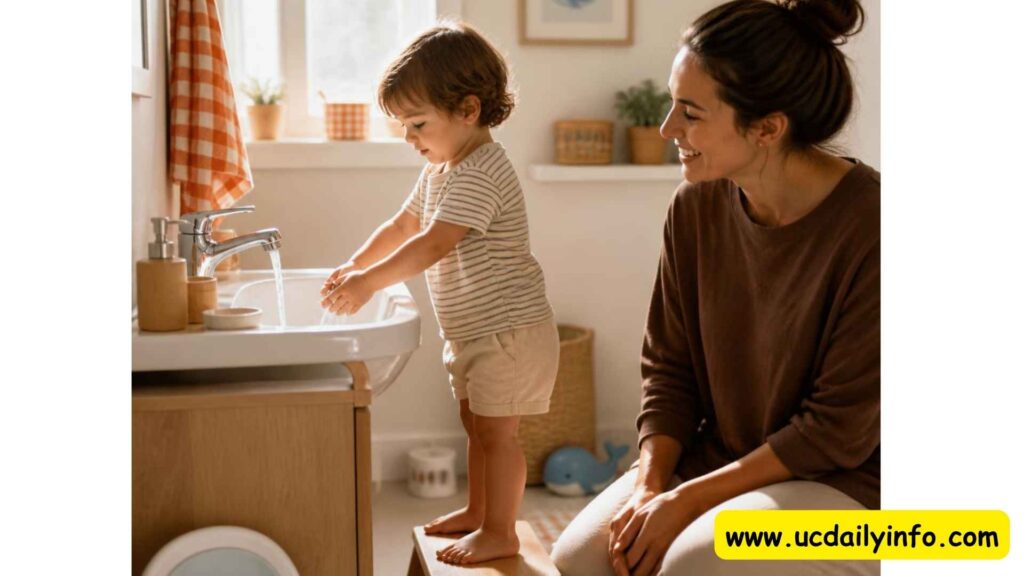
Potty training shouldn’t feel like an isolated project that takes over the entire day.
Instead, gradually incorporate bathroom habits into your child’s normal routine.
For example:
Morning: Use the potty after waking.
Mealtime: Encourage regular bathroom opportunities after eating.
Before leaving: Try the potty before going out.
Before bath: Offer another opportunity.
Bedtime: Use the bathroom before getting into bed.
This routine helps your toddler connect bathroom habits with familiar daily activities.
You can also teach related skills such as flushing, wiping with appropriate assistance, pulling clothes up and down, and washing hands.
Don’t expect your toddler to master every step immediately.
Learning to use the toilet is one skill. Becoming completely independent in the bathroom is another.
5. Keep the Routine Consistent Outside the Home
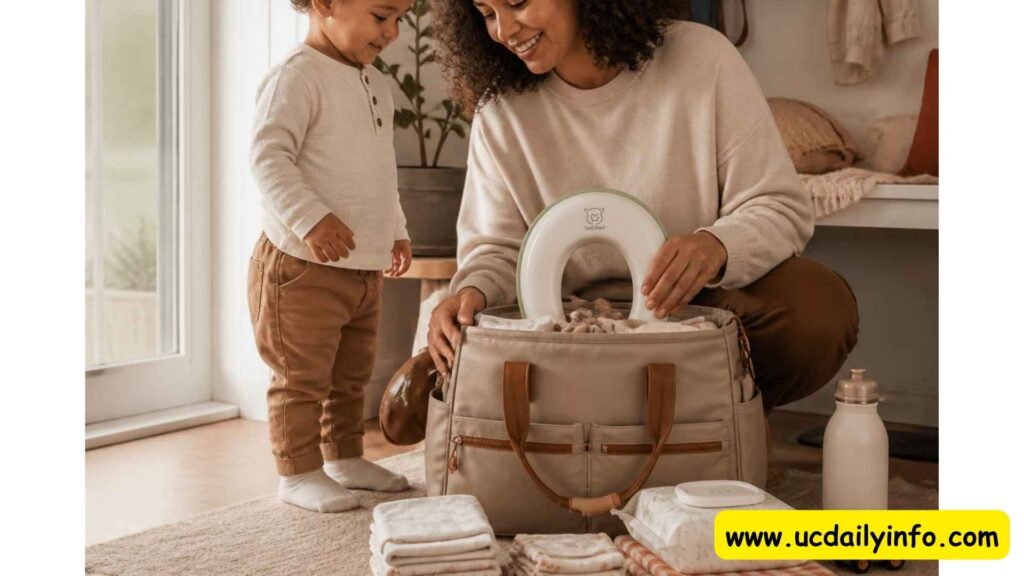
Once your toddler starts making progress, you don’t need to stay indoors all day.
In fact, learning to use different bathrooms is an important part of becoming independent.
Before leaving home, encourage your child to use the potty.
For longer outings, bring a small potty-training travel kit.
Your kit might contain:
- Spare underwear.
- Two changes of clothes.
- Wipes.
- Small plastic or reusable bags.
- Hand sanitizer.
- A portable potty or toilet-seat insert.
- Tissues or toilet paper.
If your child attends daycare, preschool, or spends time with another caregiver, communicate your routine.
Everyone doesn’t need to follow exactly the same method, but consistency in language and expectations can help your toddler understand what to do.
6. Handle Accidents Calmly

Accidents are part of potty training.
Your child may successfully use the toilet several times and then have an accident. This doesn’t necessarily mean they have gone backward.
Stay calm.
Instead of saying:
“Why didn’t you tell me?”
Try:
“That’s okay. Let’s get cleaned up and try again next time.”
You can help your toddler change clothes and participate in cleanup in an age-appropriate way.
However, cleanup should never become a punishment.
Your child needs to understand that accidents are manageable.
Avoid laughing at your child, shaming them, or making embarrassing comments.
A calm response teaches your toddler that mistakes are part of learning.
7. Teach Your Toddler to Recognize Their Body Signals
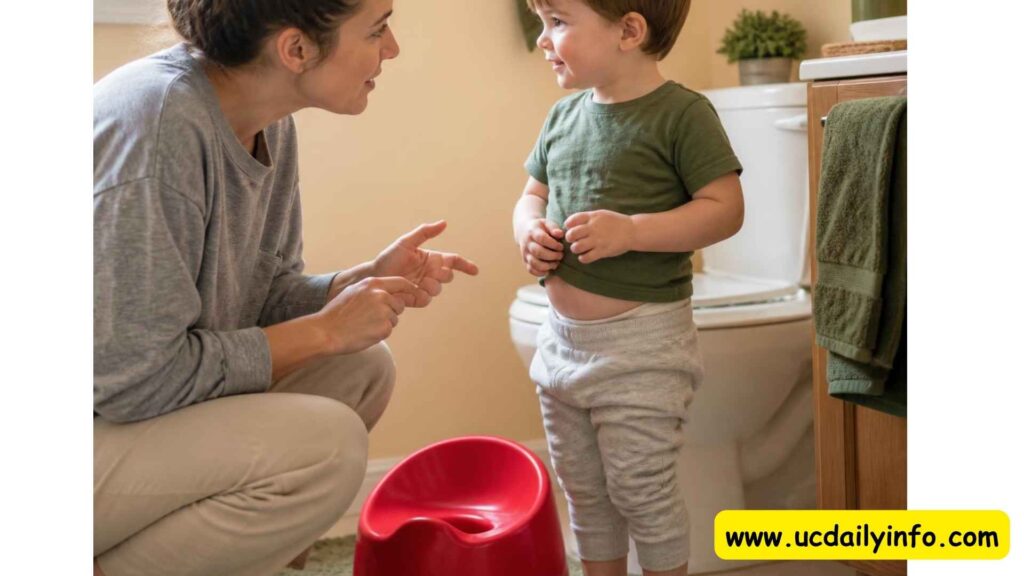
Eventually, the goal is for your child to recognize the feeling that tells them they need to use the bathroom.
At first, you may need to remind them.
Over time, start helping them connect the physical sensation with the action.
You might say:
“Your tummy feels like you need to poop? Let’s go to the potty.”
“Do you feel like you need to pee?”
“Your body is telling you it’s time to use the bathroom.”
Don’t constantly quiz your toddler, though.
If you ask every few minutes, “Do you need to go?” your child may begin relying on you rather than learning to recognize their own signals.
Give them opportunities to become aware of what their body is telling them.
8. Be Patient With Nighttime Potty Training

Daytime potty training and nighttime dryness are not necessarily the same milestone.
Some children may stay dry during the day but continue wetting the bed at night for quite a while.
This can happen because nighttime bladder control develops separately from daytime toilet habits.
Instead of expecting your toddler to stay dry every night immediately, focus first on daytime progress.
Helpful nighttime habits can include:
- Using the bathroom before bed.
- Limiting excessive drinks right before bedtime while still keeping your child appropriately hydrated.
- Using protective bedding.
- Keeping the bathroom easy to access.
- Responding calmly to nighttime accidents.
Don’t shame your child for wetting the bed.
If nighttime wetting continues and you have concerns, discuss it with your child’s pediatrician.
Potty Training Mistakes Parents Should Avoid
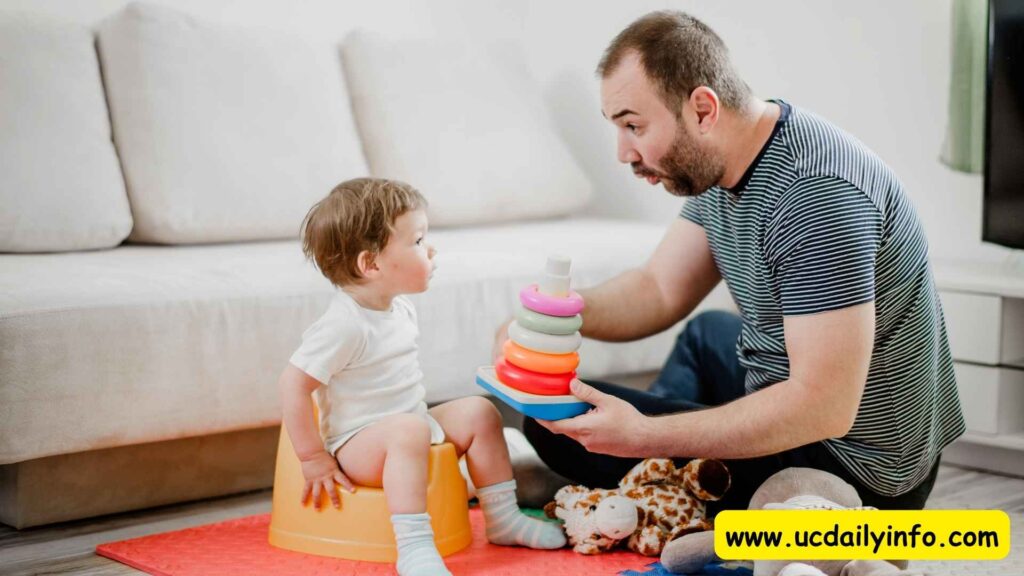
Even when you’re doing everything with good intentions, certain approaches can create unnecessary stress.
Starting Too Early
If your child isn’t showing readiness signs, forcing the process may lead to resistance.
Expecting Immediate Results
Potty training can take time. A few successful toilet trips don’t mean your toddler is completely trained.
Comparing Your Child With Other Toddlers
One child may learn in a week while another takes months. Comparison rarely helps.
Using Punishment
Punishment can make your child anxious about using the bathroom.
Changing the Routine Constantly
Consistency helps toddlers understand what is expected.
Making Accidents a Big Deal
Reacting dramatically can make accidents more stressful for everyone.
Staying on the Potty Too Long
Your child doesn’t need to sit on the toilet for 20 or 30 minutes waiting to go.
Keep bathroom attempts relaxed and reasonably short.
What If Your Toddler Refuses to Use the Potty?
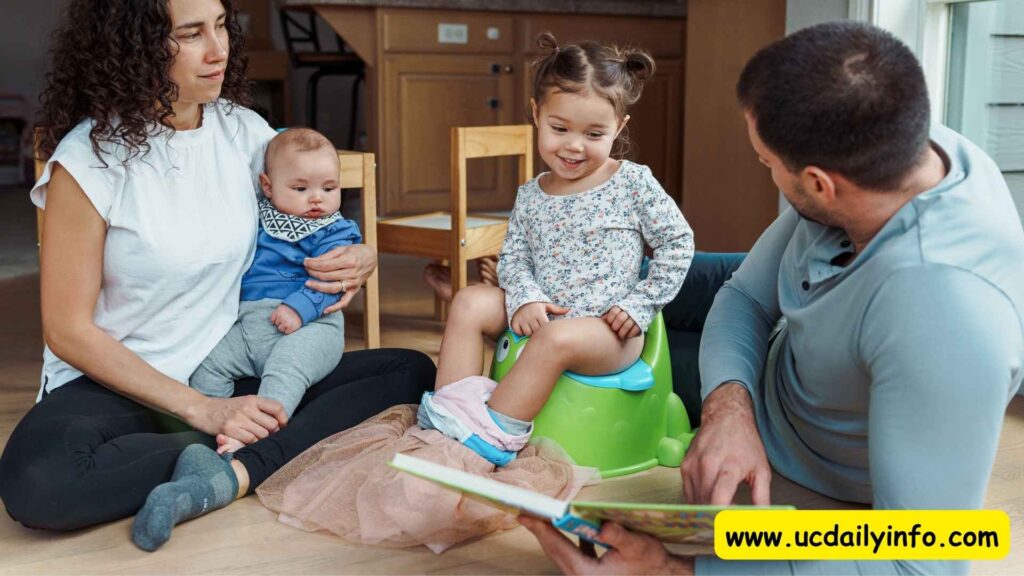
Potty refusal is common.
If your toddler becomes upset every time you mention the potty, pushing harder may make the situation worse.
Instead, take a step back.
Try making the potty familiar without requiring your child to use it immediately.
You can let your child:
- Sit on it fully clothed.
- Choose where it should be placed.
- Pick their own underwear.
- Read a potty-training book.
- Watch you demonstrate normal bathroom habits when appropriate.
- Help decorate a simple reward chart.
Sometimes a short break can help.
If your child becomes extremely distressed, stop active training for a while and try again later.
Potty training should be a gradual learning process, not a daily battle of wills.
How to Make Potty Training Easier When Traveling
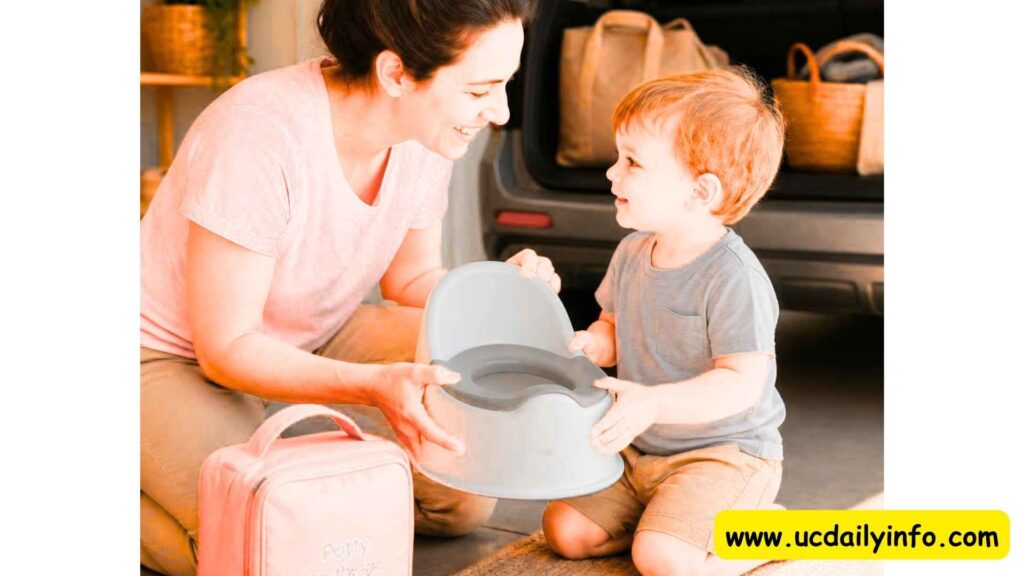
Travel can make potty training more complicated because you’re introducing unfamiliar bathrooms, long car rides, and changes in routine.
Preparation helps.
Before leaving home, encourage your child to use the toilet.
During road trips, plan regular bathroom breaks.
When you’re visiting a restaurant, mall, park, or another public place, identify the bathroom early.
If your toddler is uncomfortable using public toilets, a portable toilet seat can make the transition easier.
Choose a product that is portable, stable, easy to clean, and appropriate for your child’s age and size.
How to Dress Your Toddler for Potty Training
Clothing can either make potty training easier or create unnecessary frustration.
Choose clothes your child can manage with minimal assistance.
Good choices include:
- Elastic-waist pants.
- Loose shorts.
- Simple skirts or dresses.
- Easy-to-remove underwear.
- Comfortable clothing without complicated buttons.
Avoid clothing that takes too long to remove.
When your child suddenly realizes they need to use the bathroom, being able to pull down their pants quickly can make a difference.
You can practice at home by teaching your toddler how to pull their pants down and back up.
Praise the effort even if they need help.
How to Teach Bathroom Hygiene
Potty training isn’t complete when your child successfully uses the toilet.
Bathroom hygiene is another important part of the process.
Teach your toddler to:
- Use the toilet.
- Wipe appropriately with your help when needed.
- Flush when appropriate.
- Pull clothing back up.
- Wash hands with soap and water.
- Dry their hands.
Children may need supervision with wiping for some time, particularly after bowel movements.
Make handwashing part of the routine from the beginning so it becomes automatic.
If your child struggles with reaching the sink, a stable step stool can help them become more independent.
How Long Does Potty Training Take?
There is no universal timeline.
Some children make noticeable progress within a few weeks. Others need several months.
Progress can also be uneven.
Your toddler might have a successful week and then experience more accidents during a stressful period, illness, travel, or a major change in routine.
That doesn’t necessarily mean you’ve failed.
Look at the overall direction rather than expecting perfect progress every day.
Ask yourself:
Is my child becoming more aware of their bathroom needs?
Are they communicating more?
Are accidents becoming less frequent?
Are they becoming more comfortable with the potty?
If the answer is yes, you’re probably moving in the right direction.
When Should You Take a Break From Potty Training?
Sometimes continuing isn’t the best choice.
Consider taking a break if your child:
- Becomes extremely distressed whenever the potty is mentioned.
- Constantly refuses to sit on the toilet.
- Holds urine or stool because of fear.
- Is experiencing significant stress around bathroom use.
- Is going through a major life transition.
A break doesn’t mean giving up.
You can return to normal diaper or pull-up routines while continuing to talk casually about the potty.
Then, when your child seems more comfortable, you can begin again.
When Should You Talk to Your Child’s Pediatrician?
Most potty-training challenges are normal, but there are situations where professional guidance is appropriate.
Talk with your child’s pediatrician if you have concerns about:
- Pain during urination or bowel movements.
- Persistent constipation.
- Frequent urinary accidents after your child had been consistently dry.
- Blood in urine or stool.
- Significant fear or distress around using the toilet.
- Unusual changes in bathroom habits.
- Ongoing concerns about developmental readiness.
Never assume that a difficult potty-training experience is simply stubbornness. Physical discomfort can sometimes affect bathroom behavior.
Frequently Asked Questions About Potty Training
What is the best age to start potty training?
There isn’t one perfect age. Many children begin between 18 months and 3 years, but readiness signs are more useful than age alone.
How do I know if my toddler is ready for potty training?
Look for signs such as staying dry for longer periods, showing interest in the toilet, communicating bathroom needs, following simple instructions, and becoming uncomfortable with dirty diapers.
How long does potty training usually take?
It varies. Some children learn relatively quickly, while others take several months. Consistency, readiness, and temperament all play a role.
Should I use rewards for potty training?
You can use simple rewards such as stickers if your child responds well to them. However, rewards aren’t necessary. Praise and encouragement can work just as well for many children.
What should I do when my toddler has an accident?
Stay calm, help your child get cleaned up, and reassure them that accidents happen. Avoid punishment, embarrassment, or anger.
What if my toddler refuses to use the potty?
Avoid forcing them. Make the potty familiar and positive, then consider taking a short break if resistance continues.
Should I use a potty chair or a toilet seat?
Either can work. A potty chair may feel less intimidating to some toddlers, while a toilet-seat reducer allows your child to transition directly to the household toilet.
How can I make potty training easier when we’re away from home?
Use the bathroom before leaving, plan bathroom breaks, carry spare clothes, and consider bringing a portable potty or toilet-seat insert.
Is nighttime potty training different from daytime training?
Yes. Nighttime dryness often develops later than daytime toilet skills. Don’t expect nighttime control to happen at exactly the same time.
Should I punish my child for potty accidents?
No. Punishment and shame can create anxiety around bathroom use. Calmly clean up the accident and encourage your child to try again.
Celebrate Every Little Win
Potty training can sometimes feel like a long process, especially when you’re cleaning up another accident just when you thought your toddler had finally mastered everything.
Try to focus on progress rather than perfection.
Celebrate when your child:
- Sits on the potty willingly.
- Tells you they need to go.
- Successfully uses the toilet.
- Pulls their pants down independently.
- Washes their hands.
- Stays dry for longer periods.
- Handles an accident calmly.
These may seem like small accomplishments, but they represent important steps toward independence.
Your toddler is learning how to listen to their body, communicate their needs, manage clothing, use the bathroom, and take responsibility for personal hygiene.
That is a lot to learn.
Final Thoughts: Potty Training Made Easy Starts With Patience
The secret to potty training made easy isn’t finding one magical method that works for every child.
It’s creating a process that matches your toddler’s readiness and personality.
Keep the routine simple. Make the potty accessible. Choose practical clothing and useful tools. Encourage your child without pressure, and respond calmly when accidents happen.
Most importantly, remember that potty training is a learning process.
Your toddler doesn’t need to be perfect.
They need time, patience, encouragement, and plenty of opportunities to practice.
Some days will go smoothly. Other days may involve accidents, resistance, or frustration. That’s normal.
Take it one day at a time, celebrate the little victories, and avoid comparing your child’s progress with anyone else’s.
With consistency and a positive approach, your toddler can gradually develop the confidence and independence they need to master this important milestone.
Looking for more practical parenting ideas?
You may also enjoy our guides on Best Baby Strollers for Newborns and Top 10 Educational Toys for Babies.
You can also explore more toddler-friendly activities and parenting resources on UC Daily Info.
This article may contain affiliate links. If you purchase a product through one of our links, we may earn a small commission at no additional cost to you. We only recommend products that may be useful for parents and children.