25 Multi-Tier Wedding Cake Ideas for a Beautiful Reception
Multi-tier wedding cake ideas can take you from “something simple and white” to a saved folder with forty completely different designs. One has tiny pearls. Another looks like a garden. Suddenly, choosing dessert feels like choosing another wedding outfit.
Start with the feeling you want your reception to have. A softly textured cake can suit a relaxed celebration, while clean edges and sculptural details create a more formal focal point. The right design should feel at home in your venue, and still be something you cannot wait to eat.
These 25 ideas cover romantic flowers, vintage piping, modern shapes, and colorful finishes, with practical details to help you turn a favorite image into a useful brief for your baker.
Before You Choose: Tiers Are Different From Layers
A tier is one complete cake section, usually made from several cake layers with filling between them. A three-tier wedding cake has three separate cake sections arranged vertically; it does not simply have three layers of sponge.
Tier count alone does not tell you how many guests a cake will serve. Diameter, height, portion size, and the number of edible tiers all matter. Give your baker your expected guest count and ask for a serving plan before deciding on the silhouette.
1. Classic White Cake With a Cascade of Sugar Roses
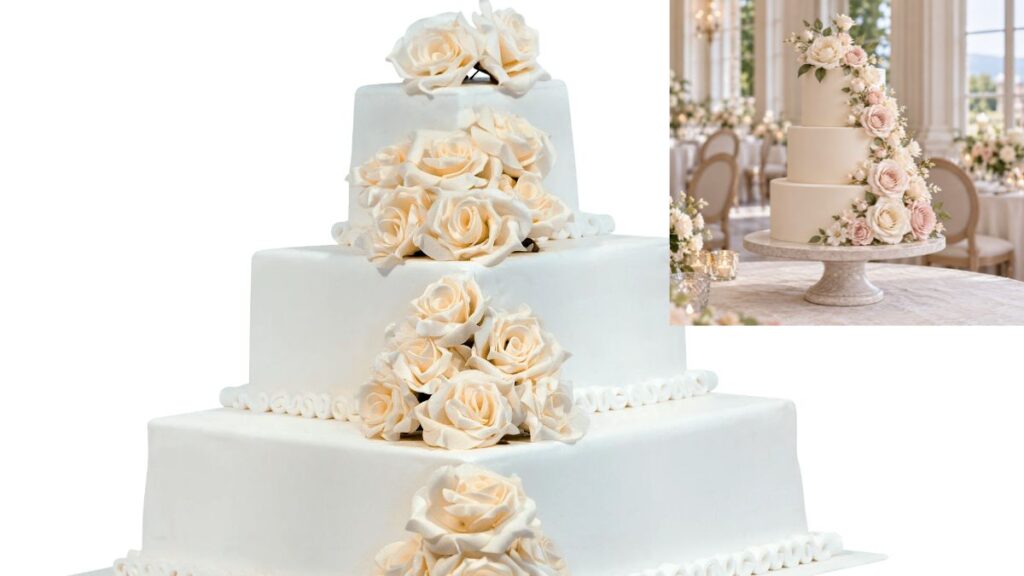
A white cake with roses sweeping down one side is a lovely starting point if you want a traditional design with movement. Keep most of the icing smooth so the flowers have room to stand out rather than covering every surface.
Choose ivory roses for a gentle tonal look, or introduce a few blush blooms to echo your bouquet. Ask the baker to position the cascade toward the main viewing angle of the cake table. There is little point in paying for beautiful detail that ends up facing a curtain.
2. Two-Tier Minimalist Cake for an Intimate Reception
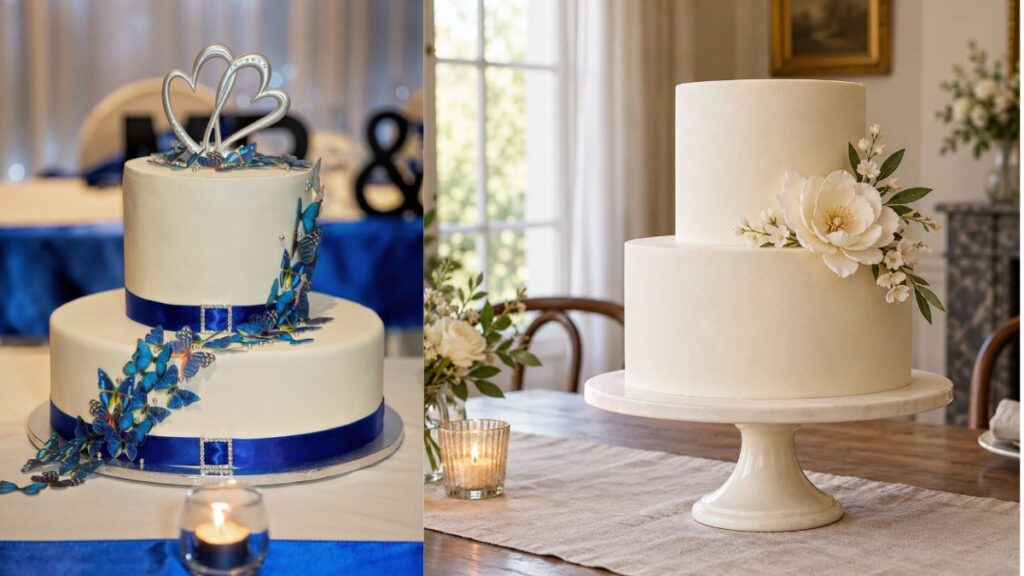
Two tiers can feel complete when the proportions are considered carefully. A wider bottom tier and a smaller upper tier create the familiar wedding cake shape without needing a towering display.
Try warm white icing, crisp edges, and one small sugar flower arrangement. A well-chosen pedestal adds presence without adding more cake. Ask for a sketch showing the stand and cake together; an oversized stand can make a small cake look lost rather than elegant.
3. Vintage Lambeth Cake With Elaborate Piping
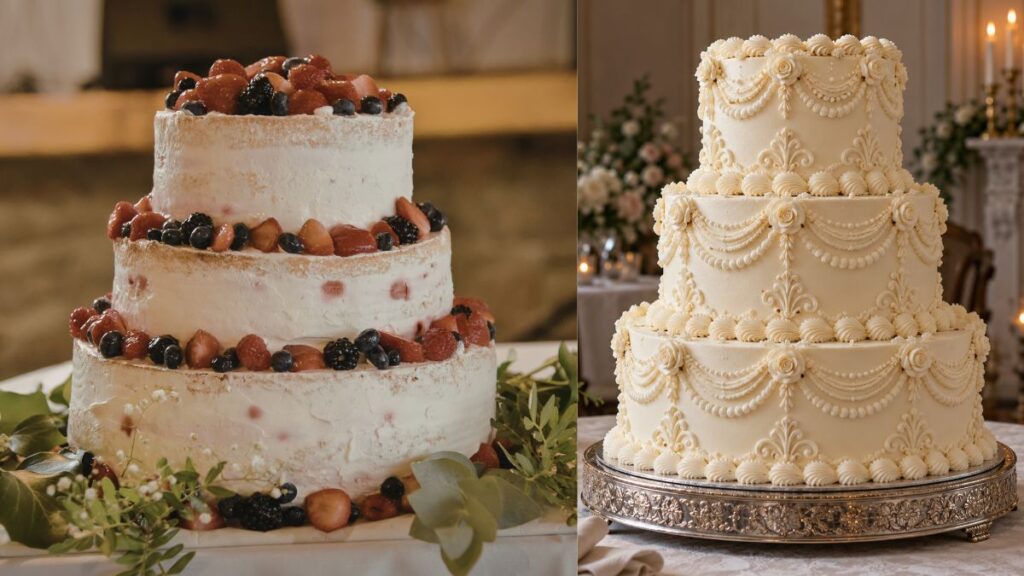
If you love decorative borders, swags, and a little old-fashioned drama, a Lambeth-inspired cake gives you plenty to enjoy. The appeal is in the layered piping: each border adds depth, almost like decorative molding around a beautiful room.
Keep the palette to ivory or pale pink if you want the texture to lead. Because intricate piping involves detailed work, ask which elements are included in the quote. A simpler version with fewer borders can preserve the mood when the fully elaborate design exceeds your budget.
4. Delicate Pearl Wedding Cake
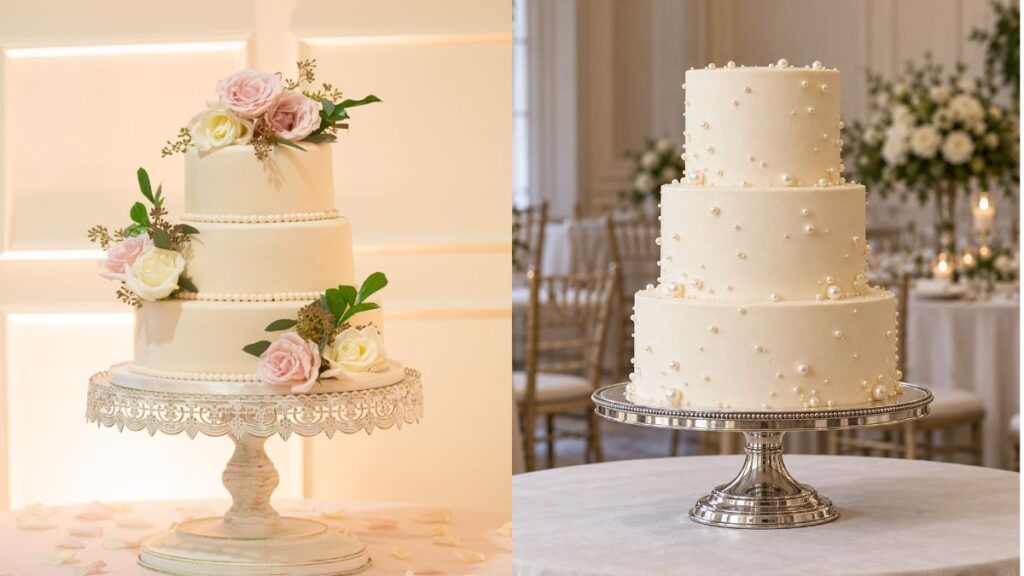
Pearl details bring texture to a simple cake without needing large flowers or strong color. A scattered arrangement feels light and modern; neat rows around the base of each tier feel more formal.
Choose pearls in a similar shade to the icing for a subtle effect. Ask your baker about edible pearl size and texture, especially if you prefer decorations that are easy to eat. Keeping the table accessories simple helps those tiny details remain visible in photographs.
5. Softly Textured Buttercream Cake
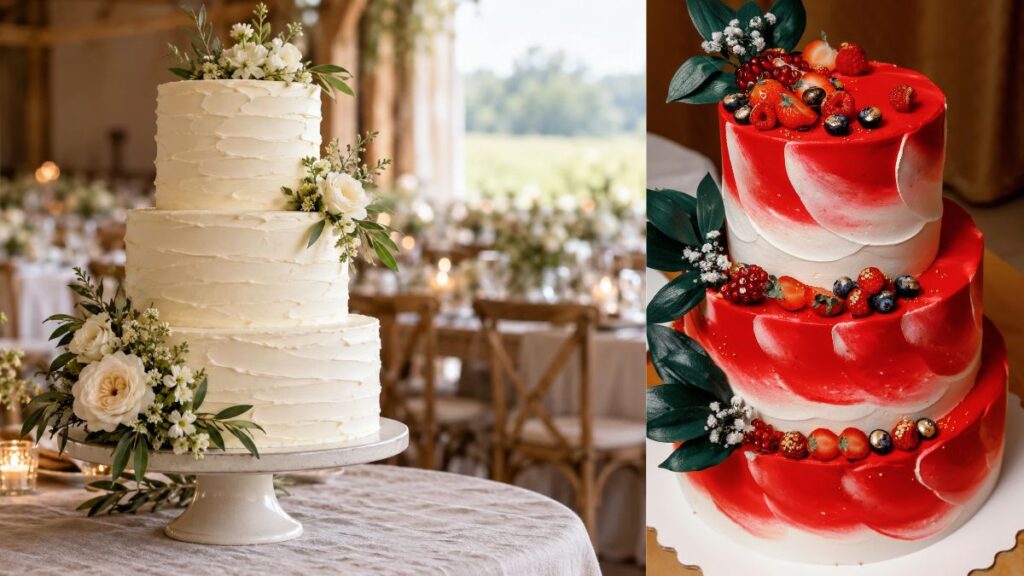
Buttercream applied in loose horizontal strokes gives a cake a relaxed, handmade appearance. It is a good visual match for linen tablecloths, informal flowers, and receptions where highly polished fondant would feel too formal.
The finish should still look intentional: ask for even tier shapes and a consistent texture. If your reception will be warm or outdoors, discuss the recipe, filling, storage, and display timing with your baker. A photograph cannot tell you how a particular cake will perform in your venue.
6. Pale Pink Ombré Cake
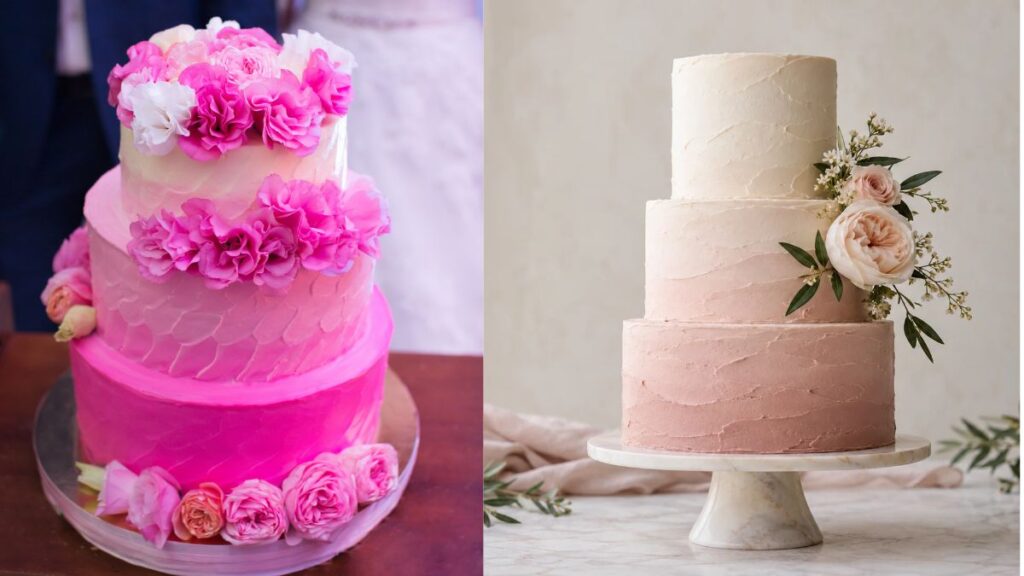
An ombré cake introduces color gradually, moving from a deeper blush at the base to almost white at the top. It is an easy way to include pink without making every tier equally bright.
Bring a color reference to your consultation because “dusty pink” can mean several different things. Keep the decorations restrained; a small sugar bloom or a fine piped border is enough. The color transition should be the feature rather than a background for five competing details.
7. Sage Green and Ivory Cake
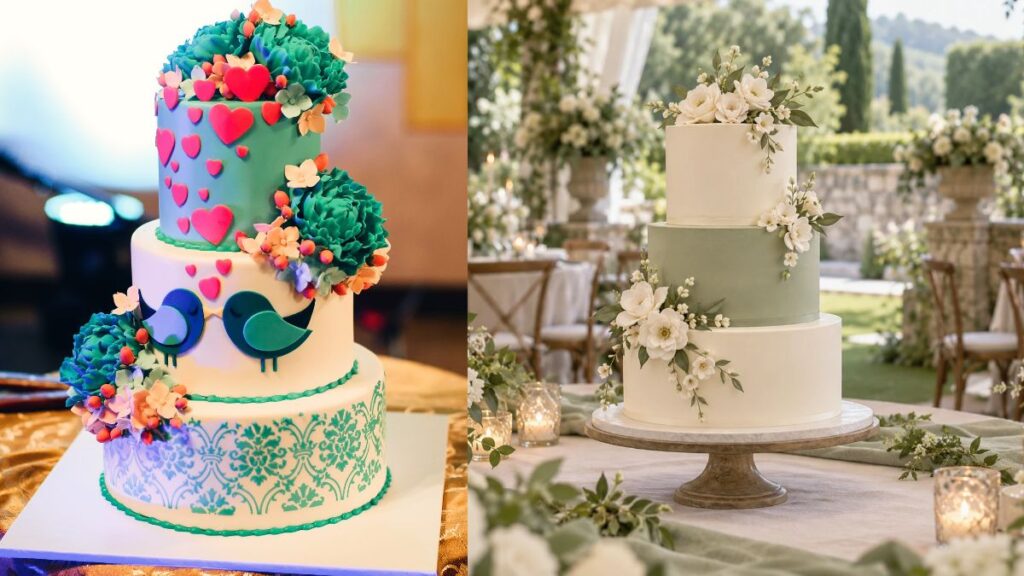
Sage and ivory create a calm palette that works especially well with garden-inspired styling. Try one sage tier between two ivory tiers, or use sage as a narrow painted band rather than coloring the whole cake.
Repeating a color from your ceremony helps the celebration feel connected. If you are still choosing that backdrop, these wedding arch decorations offer ideas you can coordinate with the cake without copying every detail. A shared palette is usually enough.
8. Cake With a Dramatic Sugar Flower Cascade
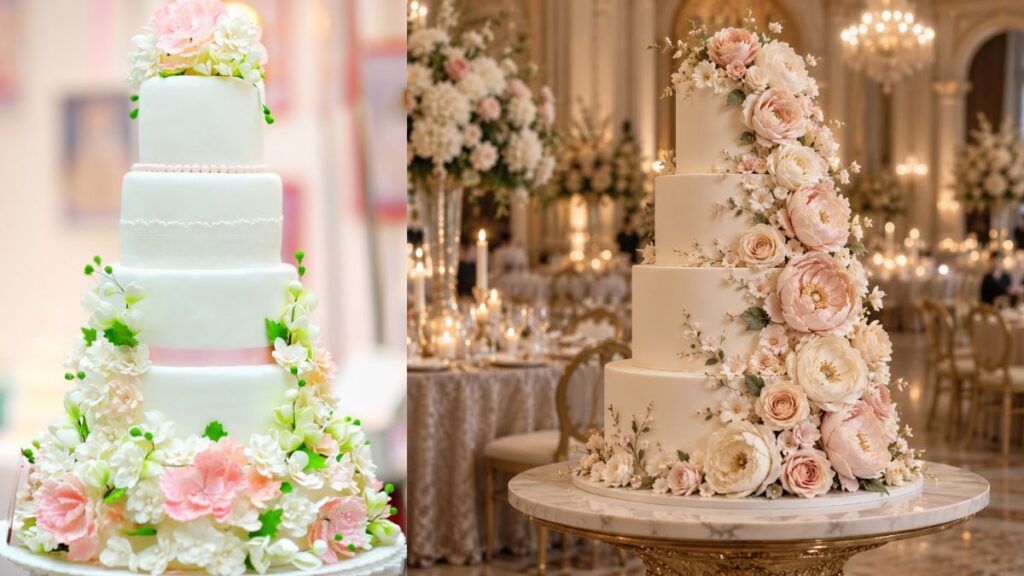
For a cake that doubles as a reception centerpiece, let oversized sugar flowers travel from the top tier toward the base. Varying the flower sizes creates depth, while leaving some icing exposed stops the arrangement from feeling crowded.
Ask how the flowers will be secured and which pieces must be removed before cutting. Detailed sugar work can be a substantial part of the price, so decide whether you want a full cascade or a smaller statement cluster before requesting your quote.
9. Pressed Edible Flower Cake
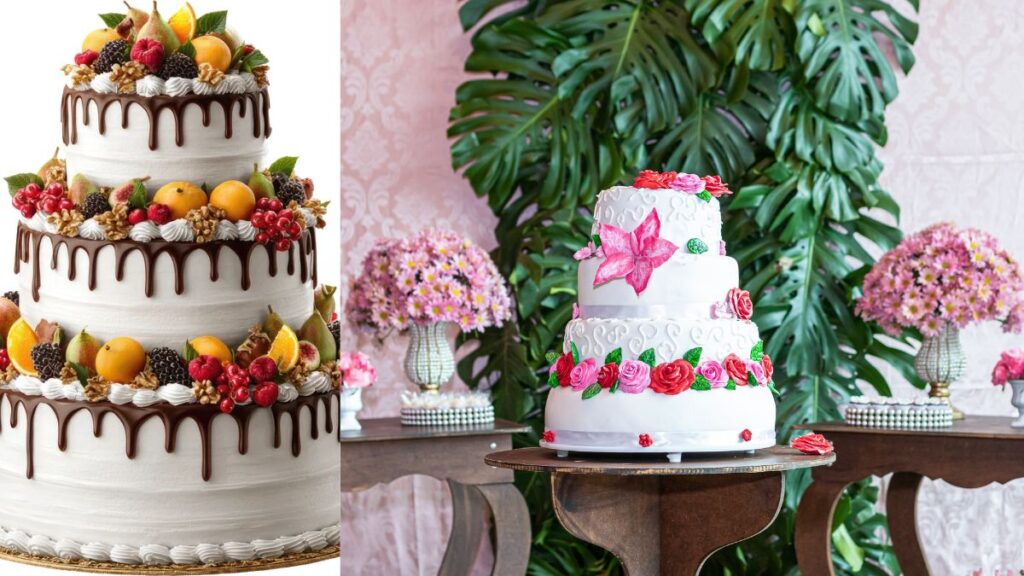
Pressed flowers create a meadow-like pattern across pale icing. The effect is especially pretty when small blossoms are spaced loosely rather than arranged in rigid rows.
The important word is edible. Ask your baker to use correctly identified edible flowers grown for food use; ordinary florist flowers are not automatically suitable. The Royal Horticultural Society’s edible flower guide explains identification and sourcing precautions. A similar botanical look can also be created with painted or piped flowers if suitable edible blooms are unavailable.
10. Semi-Naked Cake With Berries
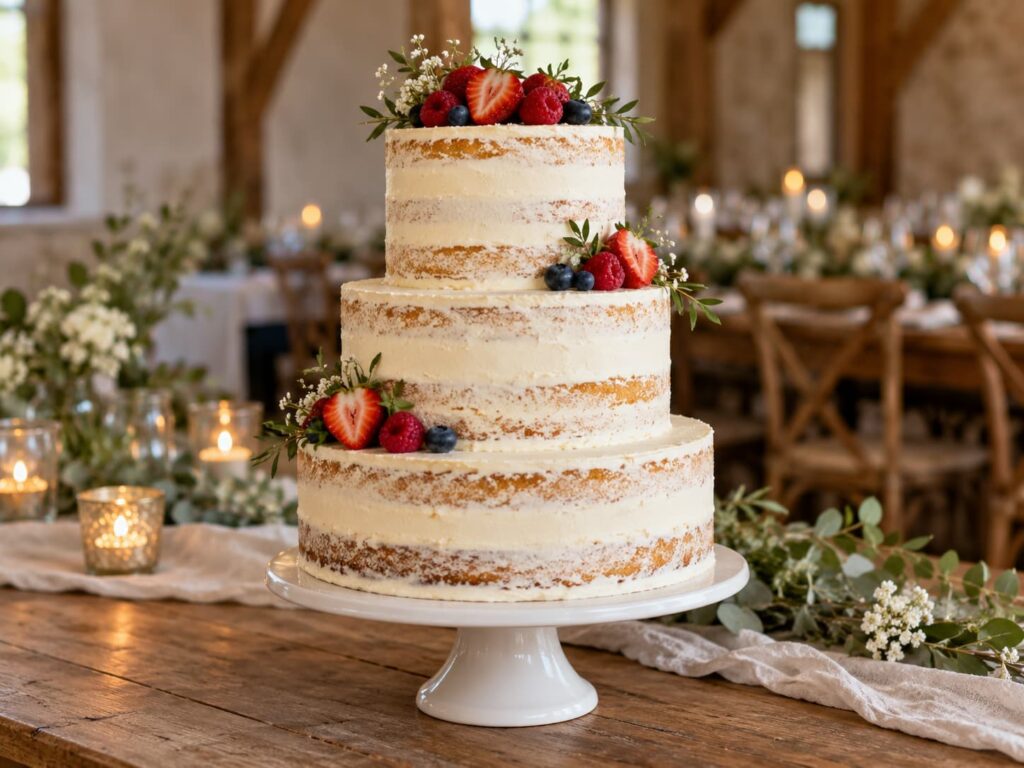
A semi-naked finish allows hints of sponge to show through a thin coating of icing. Add a restrained arrangement of strawberries, raspberries, or blueberries for a design that feels closer to a generous celebration dessert than a formal sculpture.
Ask when the fruit will be added and how the cake will be stored before serving. Fresh fruit and exposed sponge need thoughtful handling. Keep the styling simple: a neutral stand and a few berries around the base can be enough without covering the table in extra decorations.
11. Marble-Effect Fondant Cake
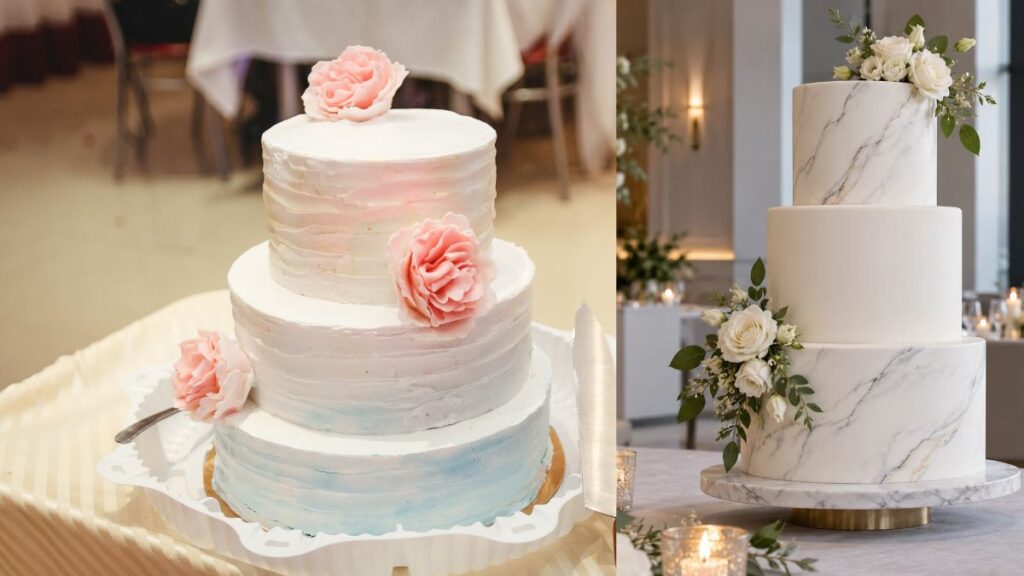
Marbled fondant brings a stone-inspired finish to a wedding cake. Soft gray veining against white looks architectural, while blush or beige veining creates a warmer effect.
Use the marble treatment on one or two tiers and keep the others plain if you prefer a quieter design. Ask for a sample image of the baker’s own marbling work, since the pattern is handmade and will vary. Think of your reference as a guide to color and mood rather than a template for identical veins.
12. Ivory Cake With Edible Gold Accents
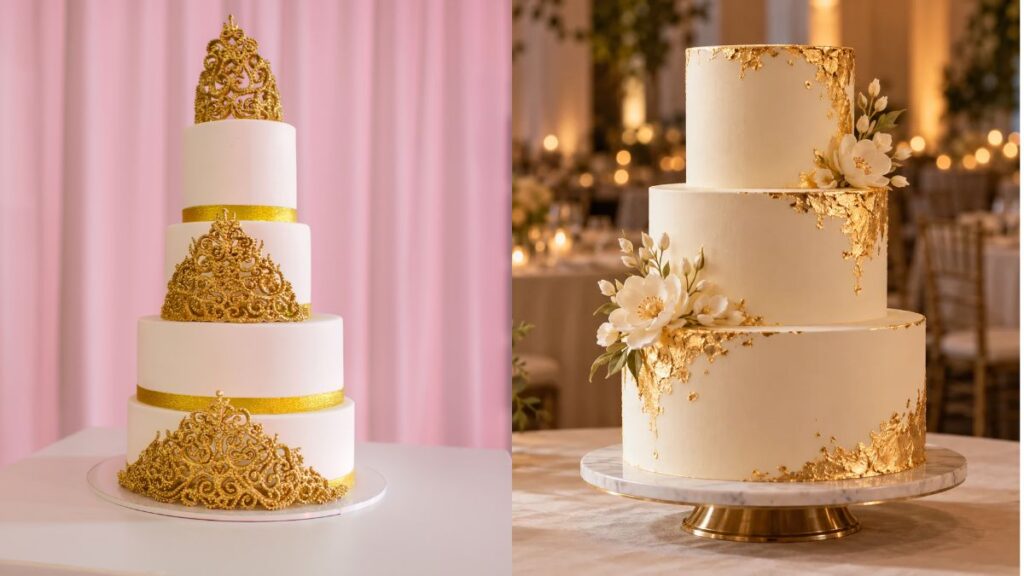
A little gold can give a plain ivory cake an occasion-worthy finish. Concentrate it along an irregular edge or in a few small patches so it catches the light without overwhelming the cake.
Specify gold intended for edible use rather than craft decoration. Warm metallic accents pair well with cream flowers and candlelit settings, but they do not need to match every fork and candleholder exactly. Keep the design focused on the contrast between smooth icing and a few reflective details.
13. All-White Cake With Mixed Textures
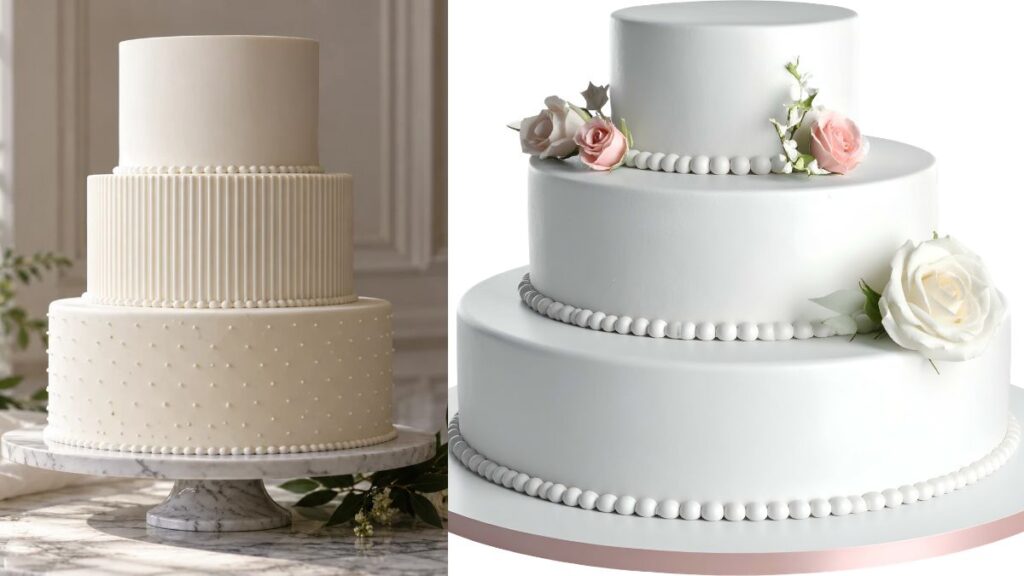
An all-white cake does not have to look plain. Combine a smooth tier with a ribbed tier and a third finished in small piped dots. The shared color keeps the design cohesive while the surfaces give your eye something to explore.
Choose one main texture and two quieter companions. If every tier is equally elaborate, the overall shape can disappear. Side lighting helps show the details, so ask your photographer to capture the cake before the room becomes dark and crowded.
14. Ruffled Cake Inspired by Bridal Fabric
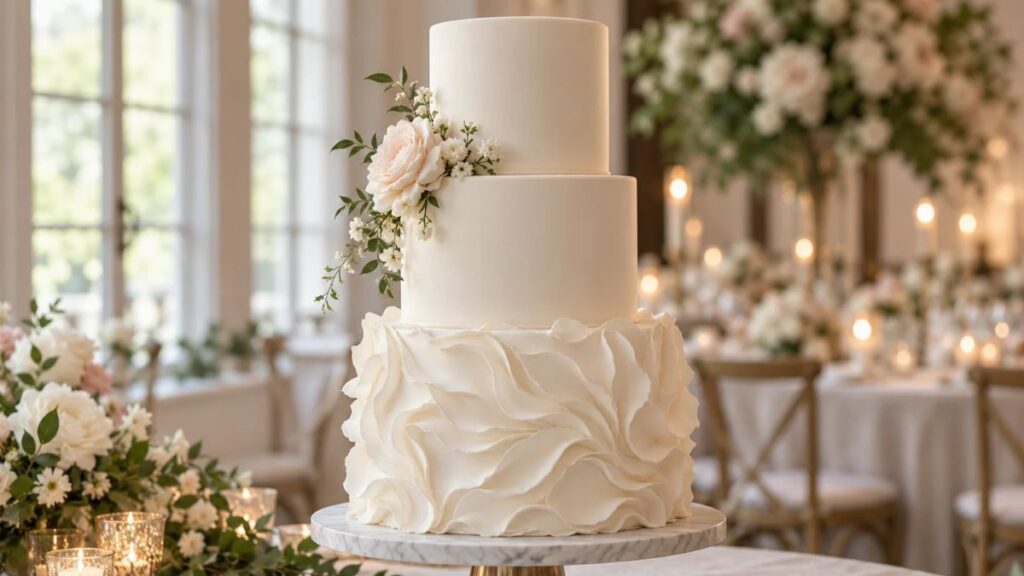
Thin ruffles can echo the movement of a wedding dress without reproducing it literally. A ruffled bottom tier with smooth upper tiers gives the design a clear focal point and keeps the silhouette readable.
Bring a close-up of your dress fabric if you want a subtle connection, but allow the baker to adapt the texture for cake. Sugar ruffles are delicate, so delivery and finishing arrangements matter. This is a design to discuss early rather than add casually in the final week.
15. Pale Blue Cake With White Piping
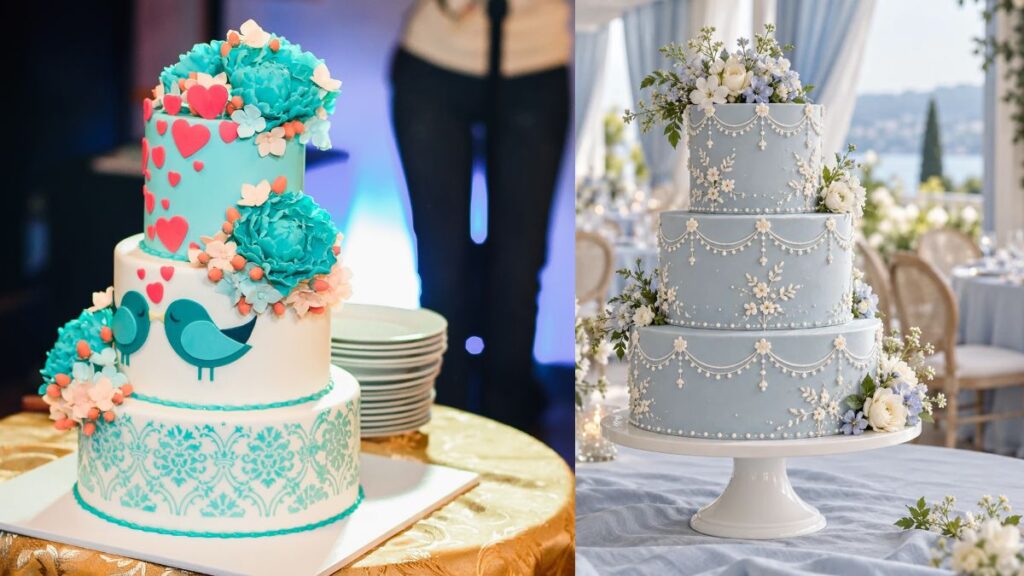
Pale blue icing with white decorative piping feels romantic without relying on pink. It can suit a coastal palette, a blue-and-white reception, or a celebration inspired by vintage ceramics.
Choose whether you want a muted gray-blue or a clearer pastel blue; the difference changes the mood considerably. A few piped borders may be enough. If you include detailed patterns, leave generous plain areas so the finished cake feels composed rather than covered in decoration from top to bottom.
16. Terracotta and Cream Cake
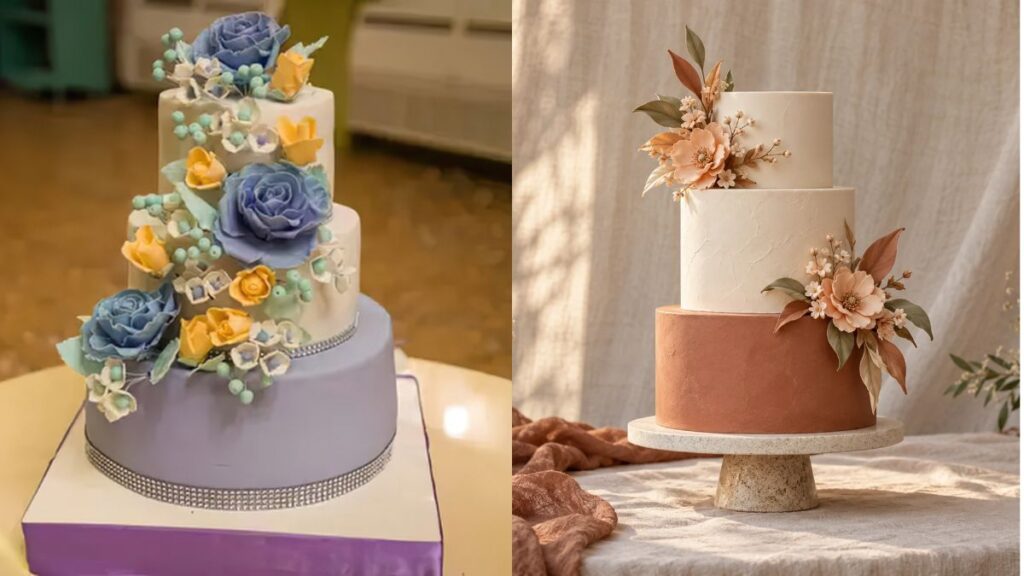
Terracotta gives a wedding cake warmth without needing a very dark finish. Pair it with cream and muted peach for a design that works with earthy table settings, autumn colors, or a relaxed contemporary venue.
Try a terracotta bottom tier, cream upper tiers, and a small cluster of sugar flowers. Keep loose dried grasses away from the edible surface; sugar versions can suggest the same shapes. A plain cake table helps the warm color stand out without adding another strong pattern.
17. Deep Burgundy and Blush Cake
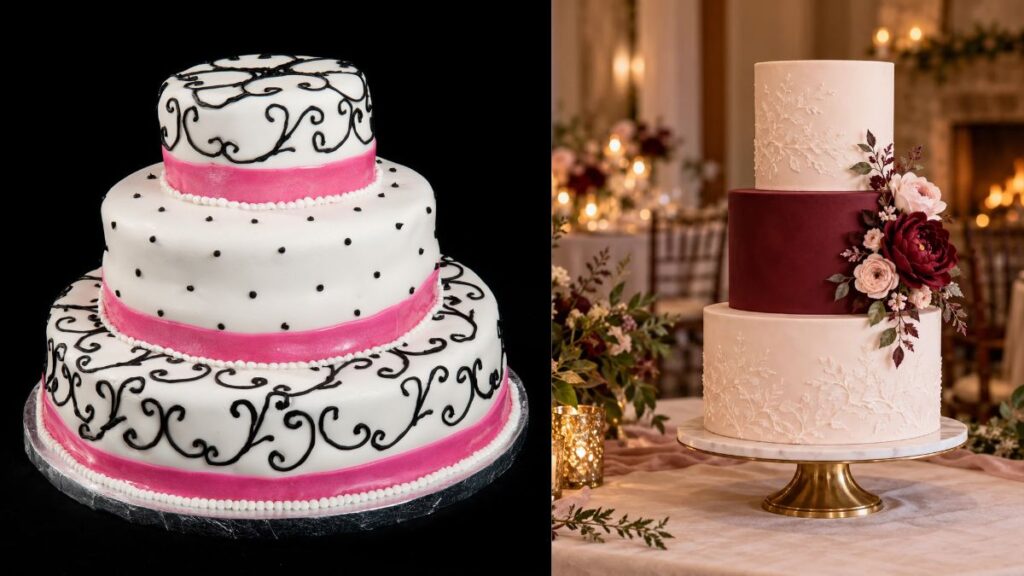
Burgundy and blush create a richer alternative to an all-pastel design. Use the deeper color as one tier or a concentrated floral accent, with softer shades elsewhere to keep the cake from looking visually heavy.
Ask to see a color sample and taste the proposed dark icing. The look and eating experience both matter. This combination works particularly well when the room already includes warm wood, cream linens, or burgundy details; it needs very little extra decoration around the stand.
18. Black and White Modern Cake
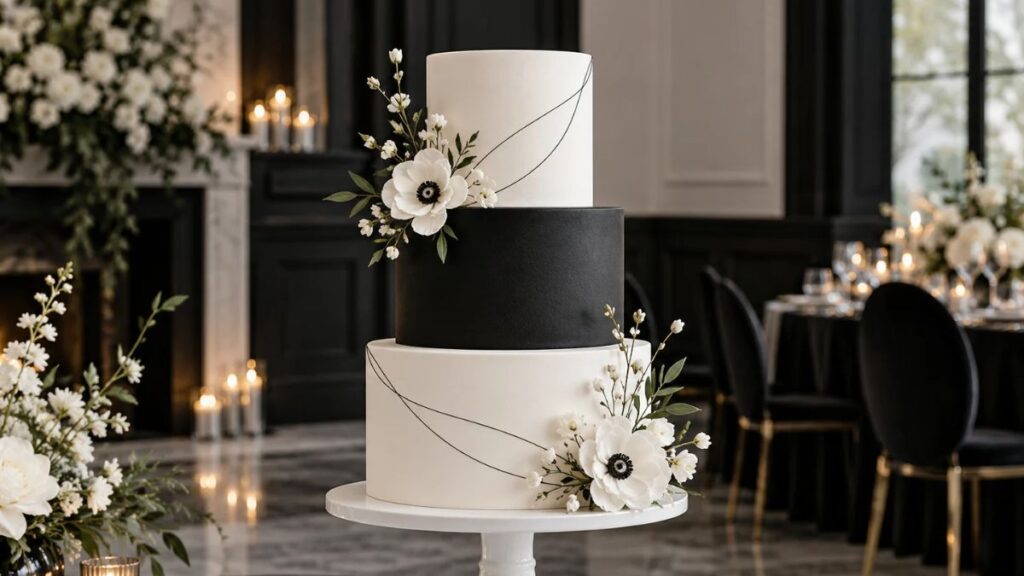
A black-and-white cake creates a strong graphic focal point. Alternate the colors between tiers or use a white cake with fine black painted lines if you prefer a lighter interpretation.
The clean finish matters more than adding lots of extras. Ask your baker how they will achieve the dark color and whether it affects flavor or stains when eaten. A simple white stand and clear space around the cake give the design room to make its statement.
19. Square-Tier Wedding Cake
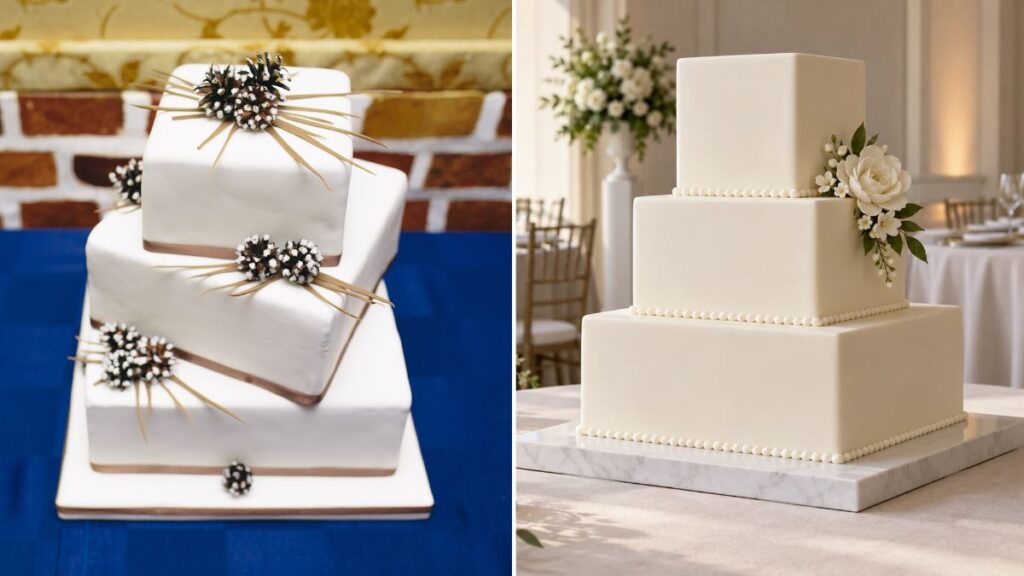
Square tiers change the silhouette immediately. Their clean corners suit modern venues and can make a simple white cake feel distinctive without elaborate decoration.
Stack the tiers neatly for a formal appearance and add a narrow piped border or a small sugar flower arrangement. Discuss the cutting plan with your baker rather than assuming a square design serves a particular number of guests. Portion size and the finished dimensions still determine how much cake you have to share.
20. Mixed Round and Square Tiers
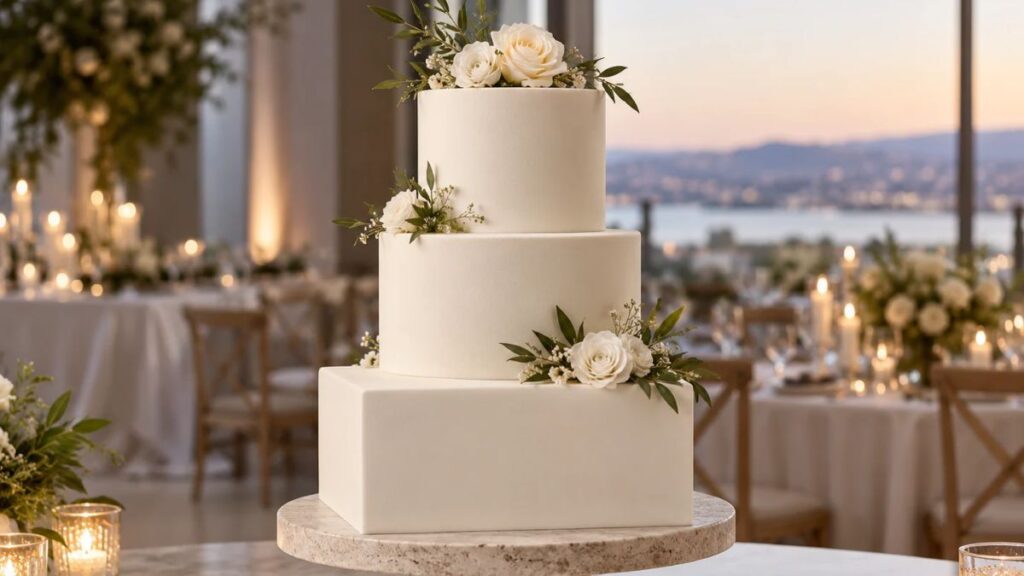
Combining a square base with round upper tiers gives a cake a sculptural feel while keeping the familiar wedding cake height. Use one color throughout so the shapes remain the main attraction.
This is a useful idea when you want something unusual but do not want bright colors or heavy decoration. Ask for a proportion sketch before approving the design. The width of the base and spacing around each upper tier make a bigger difference here than an extra flower or two.
21. Tall Cake With Uneven Tier Heights
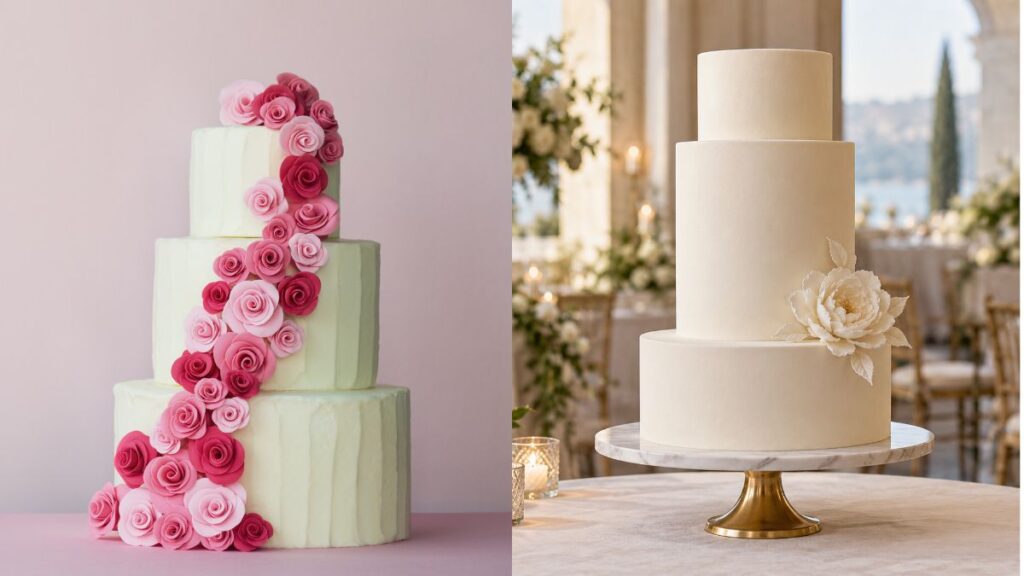
Varying the heights of the tiers creates interest without adding more colors. A tall middle tier between two shorter tiers, for example, can make a simple design feel architectural.
Ask your baker to show how the proportions affect serving and cutting. An extra-tall tier may need a different internal arrangement from a standard-height cake. Keep the decoration minimal, perhaps one fine piped line or a small sugar flower, so the unusual silhouette remains easy to appreciate.
22. Hand-Painted Botanical Cake
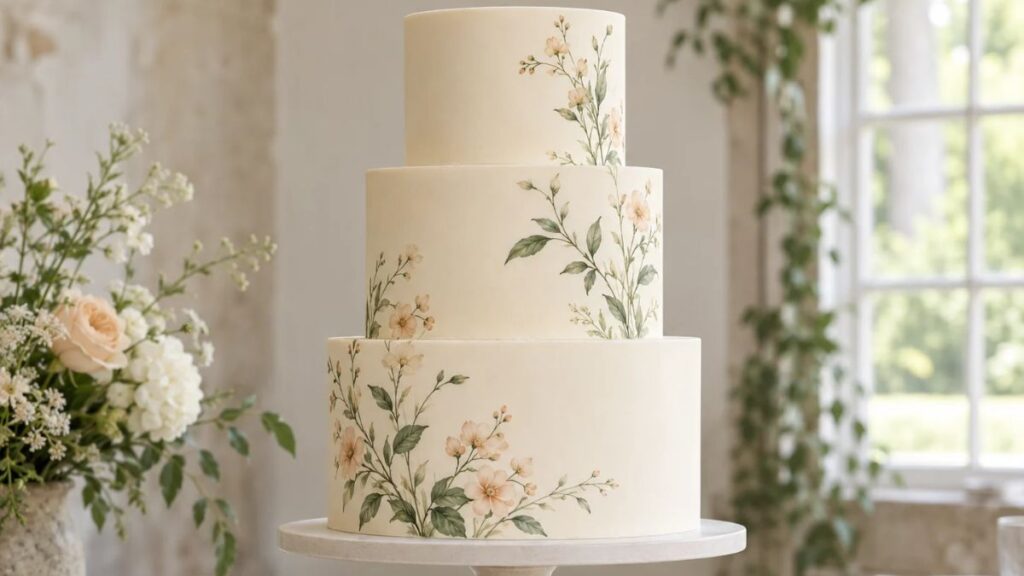
Painted stems, leaves, and flowers can turn the cake into a small piece of wedding artwork. Choose a loose botanical style for a garden celebration or fine, detailed painting for a more formal look.
Share a limited color palette rather than a collection of unrelated floral references. You might echo the main flower shape from your stationery and leave the rest to the baker’s interpretation. Make sure the quote reflects the hand-painted work; a custom illustration is a different request from a simple color wash.
23. Scalloped Edges and Tiny Bows
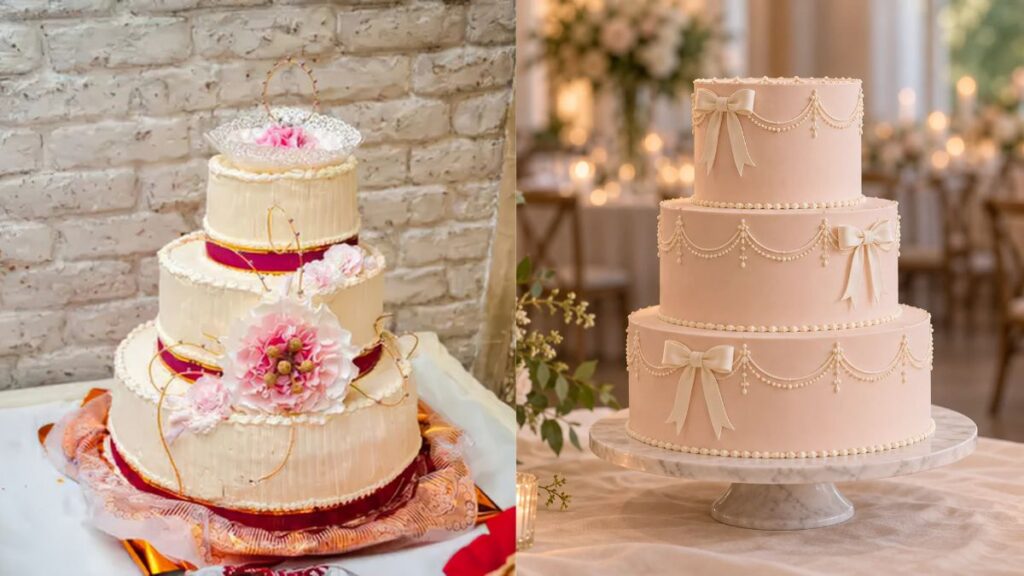
Scalloped borders and small sugar bows give a tiered cake a playful, romantic finish. They work especially well in cream, blush, or soft blue, where the little details can be seen without a strong color contrast.
Choose one repeating motif and use it consistently. A bow at every tier join may be enough; you do not need pearls, flowers, metallic paint, and a large topper as well. If real ribbon is used, ask how it will be separated from the cake and removed before serving.
24. Chocolate Wedding Cake With a Controlled Drip
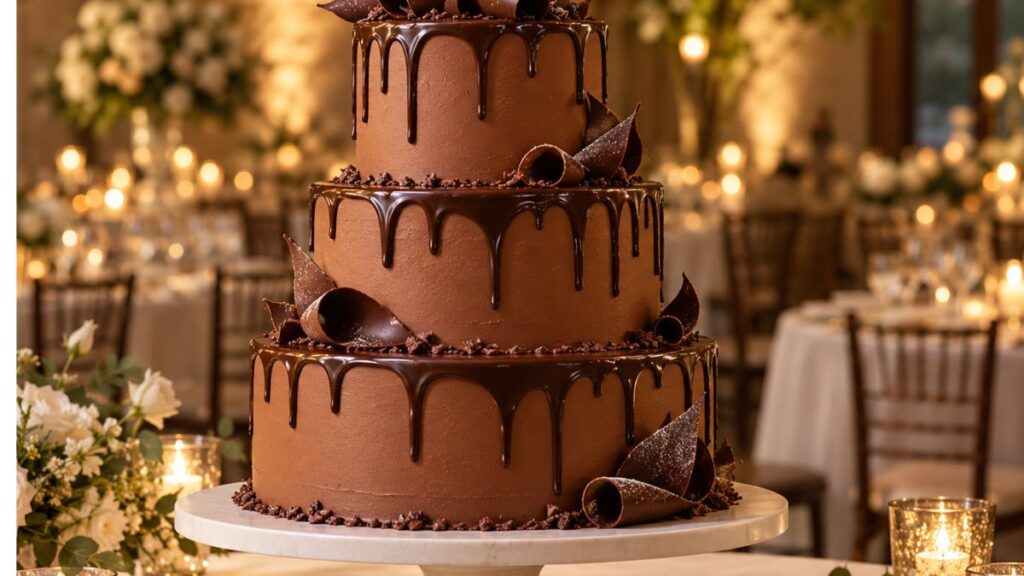
If chocolate is what you both love, there is no need to hide it behind white icing. A chocolate-finished cake with a neat ganache drip can look entirely at home at a wedding.
Keep the drip concentrated along selected edges and use a few sculpted chocolate decorations for height. Ask the baker which filling and finish suit the venue conditions. A polished presentation makes the difference: a suitable pedestal and a clear cake table help the design feel considered rather than like dessert left on a sideboard.
25. Statement Display Cake With Separate Serving Cake
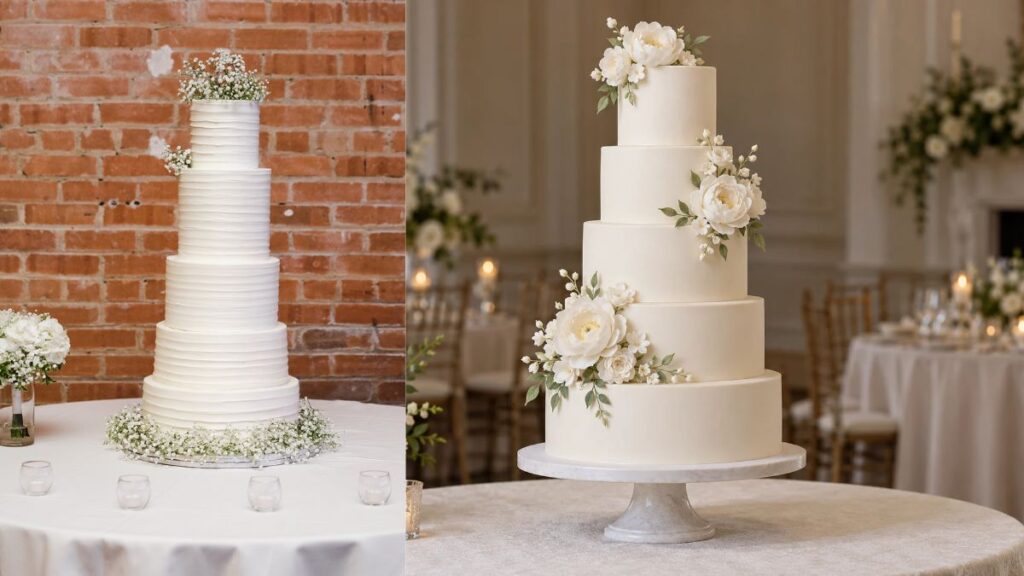
If you love the look of a tall cake but do not need that many portions, ask about a display design that combines edible tiers with decorated dummy tiers. Alternatively, a smaller cutting cake can be paired with separate kitchen cake for serving.
Neither arrangement automatically costs less: decoration, transport, and setup still take work. Request an itemized comparison. Confirm which part is edible, where you will make the ceremonial cut, and how the catering team will serve guests. The beautiful display and the practical plan should agree.
How to Choose a Multi-Tier Wedding Cake That Works for Your Day
Start With Guest Numbers and Your Dessert Plans
Tell your baker whether cake is the main dessert, part of a dessert table, or a late-evening extra. Share the guest count and ask what portion size the quote assumes. A photograph showing four tiers cannot tell you whether that cake is appropriate for your wedding.
If you want leftovers, say so explicitly. If you do not, ask how the design can be adjusted while keeping the proportions you like.
Set a Total Budget Before Choosing Detailed Decoration
Ask for a quote that separates the cake from delivery, setup, stand hire, and any collection or deposit charges. Check whether your venue charges for cutting or serving externally supplied cake.
When you need to simplify, keep your favorite feature and reduce competing details. A beautifully piped cake does not necessarily need a large sugar flower cascade too. More decoration is not always a better design.
Match the Cake to the Venue Conditions
Tell the baker about air conditioning, direct sunlight, the delivery route, stairs, and the planned display location. A shaded table outdoors is still exposed to the surrounding temperature.
Ask when the cake should arrive, where it will wait, and how long it should be displayed given its ingredients and finish. For a warm-weather celebration, agree on a practical setup schedule before settling on the final design.
Leave Structural Decisions to the Baker
Stacked cakes need a planned support system. Wilton’s stacked tiered cake construction guide illustrates the use of cake boards and dowels to support the tiers. Your baker should choose the system appropriate to the finished cake.
Agree who will transport, assemble, and position it. The cake table and stand must also suit the cake’s weight and footprint. This is one wedding detail where “we will work it out when it arrives” is an unnecessarily exciting plan.
Choose Flavors You Actually Enjoy
Use your tasting to consider the cake, filling, and icing together. If you want different flavors on different tiers, ask how many servings of each will be available and how the caterer will distribute them.
Tell the baker and caterer about dietary requirements early. Confirm ingredient information and cross-contact arrangements rather than assuming a particular flavor is suitable for every guest.
Frequently Asked Questions
How many tiers should a wedding cake have?
There is no universal number. Choose the serving quantity first, then discuss how tier sizes and heights can create the look you want. Two large tiers may provide more cake than three small ones, so tier count is not a reliable serving guide on its own.
Are more tiers always more expensive?
Additional tiers can add cake, structural work, and setup time, but the decoration also affects the price. A smaller cake with intricate sugar flowers may cost more than a larger, simply finished design. Compare itemized quotes for your actual requirements.
Can every tier have a different flavor?
Often, but it depends on the baker’s menu and the design. Ask which fillings suit the structure and storage plan. Also confirm serving quantities by flavor so guests are not all promised a slice from the smallest tier.
Is buttercream or fondant better for a wedding cake?
Buttercream offers a soft or textured appearance; fondant provides a smooth surface for sharp edges and detailed decoration. The appropriate choice depends on your preferred taste, design, recipe, and venue conditions. Ask your baker to explain the options for your wedding.
Can fresh flowers go on a wedding cake?
Only with appropriate selection and preparation. Do not assume bouquet flowers are safe for food contact. Have the baker and florist agree on suitable flowers and placement; for flowers intended to be eaten, use correctly identified edible varieties grown for food use. Sugar flowers are another option.
Do dummy tiers make a wedding cake cheaper?
Sometimes, but they still need covering, decorating, transporting, and setting up. Ask for a comparison with an all-edible design and with a smaller display cake plus separate serving cake. Choose using the total quote, not the assumption that dummy tiers are inexpensive.
When should we book our wedding cake?
Contact your preferred baker once your date and venue are confirmed. Availability and required lead times vary, particularly for detailed designs. Ask about the booking deposit, tasting arrangements, final guest-count deadline, and last date for design changes.
A Cake That Feels Like Your Celebration
The best multi-tier wedding cake ideas give you a direction, not a list of details you must include. You might choose the softness of buttercream, the charm of vintage piping, or one beautifully made sugar flower against plain ivory icing.
Save two or three favorites, identify what you like about each, and bring those notes to your baker. With the portions, budget, and venue conditions agreed, you can choose a cake that looks lovely in the room and feels just as welcome on the plate.