Parenting Mistakes That Affect Children Emotionally
Parenting is a learning journey. Every parent wants their child to grow up feeling loved, confident, and emotionally secure. But sometimes, small everyday habits can affect a child’s emotional well-being without parents realizing it.
The good news is that once parents become aware of these mistakes, they can easily make small changes that build stronger emotional connections with their children.
Below are some common parenting mistakes that can affect children emotionally and how to avoid them.
1. Not Listening to Your Child (Parenting Mistakes That Affect Children Emotionally)
Children want to feel heard and understood. When parents constantly ignore their child’s feelings or rush them while they are speaking, the child may begin to feel unimportant.
Over time, this can make children stop sharing their thoughts or emotions with their parents.
What to do instead
- Stop and give your child full attention when they speak
- Maintain eye contact
- Respond calmly, even when you disagree
When children feel heard, they feel valued and safe.

A parent kneeling to a child’s level, listening carefully while the child talks, with a speech bubble showing hearts to represent emotional connection.
2. Comparing Your Child to Others (Parenting Mistakes That Affect Children Emotionally)
Many parents compare children to siblings, classmates, or neighbors.
Examples include:
- “Why can’t you be like your brother?”
- “Your friend got better grades than you.”
These comparisons can damage a child’s confidence and make them feel like they are never good enough.
What to do instead
Focus on your child’s personal progress rather than comparing them to others. Encourage their strengths and celebrate their small achievements.

Two children standing side by side with a red “X” over comparison arrows, while each child has a star showing their unique strengths.
3. Being Too Critical (Parenting Mistakes That Affect Children Emotionally)
Constant criticism can slowly damage a child’s self-esteem.
Children who hear negative comments all the time may begin to believe they cannot do anything right.
Instead of motivating them, harsh criticism often makes children feel discouraged.
What to do instead
Use constructive guidance. Correct mistakes gently while also praising effort and improvement.
For example:
- Instead of “You did this wrong,” say “Let’s try another way together.”

Two children standing side by side with a red “X” over comparison arrows, while each child has a star showing their unique strengths.
4. Ignoring a Child’s Emotions (Parenting Mistakes That Affect Children Emotionally)
Sometimes parents dismiss emotions by saying things like:
- “Stop crying.”
- “That’s nothing to be upset about.”
But emotions are real for children. Ignoring them teaches kids to hide their feelings rather than understand them.
What to do instead
Help children name and understand their emotions.
Example:
- “I see you’re upset. Do you want to talk about it?”
This helps children develop emotional intelligence.
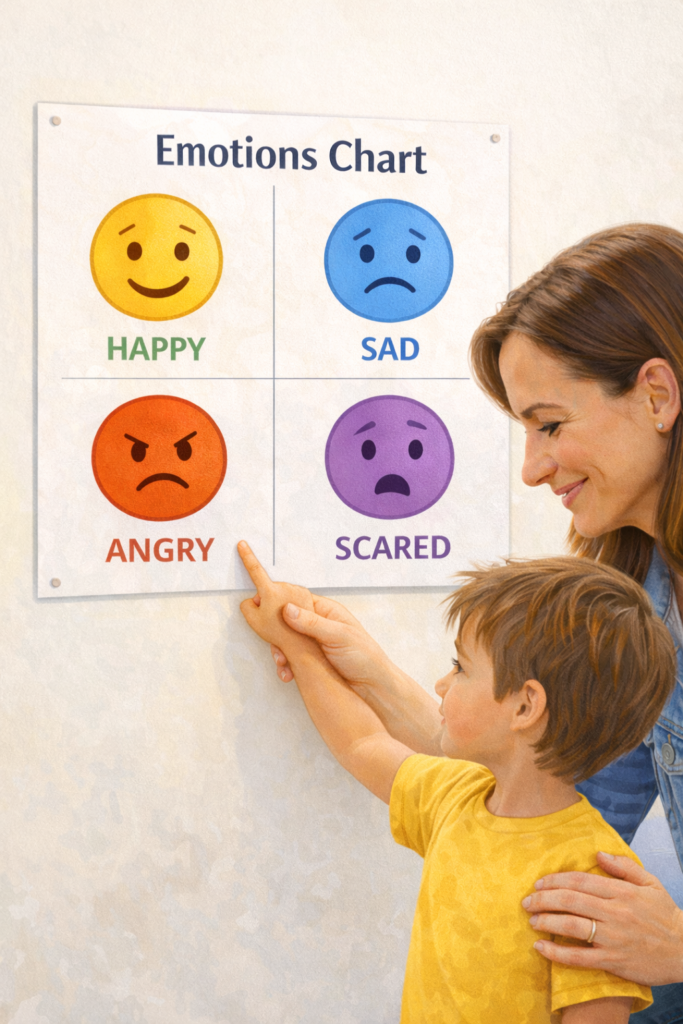
Happy, sad, angry, and scared faces, with a parent helping a child point to the feeling.
5. Always Being Too Busy
Modern life is busy. Work, phones, and responsibilities can easily take attention away from children.
But when children consistently feel like they are not a priority, it can lead to feelings of loneliness and emotional distance.
What to do instead
Even small moments of attention matter.
Try:
- 10 minutes of focused play
- Reading a short story together
- Talking about their day before bedtime
These simple habits strengthen emotional bonds.

A parent putting a phone aside while sitting on the floor playing with a child and toys.
6. Overprotecting Your Child
Many parents try to protect their children from every mistake or challenge. While the intention is good, overprotection can stop children from developing confidence and independence.
Children need opportunities to try, fail, and learn.
What to do instead
Allow children to solve small problems on their own while offering guidance when needed.
This helps them build resilience and confidence.

A child climbing small steps while a parent stands nearby with open arms, ready to help but not carrying the child.
Final Thoughts (Parenting Mistakes That Affect Children Emotionally)
No parent is perfect. Every parent makes mistakes, and that is part of learning.
What matters most is creating a home where children feel loved, supported, and emotionally safe. Small daily actions like listening, encouraging, and spending time together can make a big difference in a child’s emotional development.
When parents become more mindful of their words and actions, they help their children grow into emotionally healthy and confident individuals.
YOU MAY LIKE;
Emotional Burnout in Mothers and How to Recover
How the American School System Works for Parents
How American Parents Manage Childcare Costs