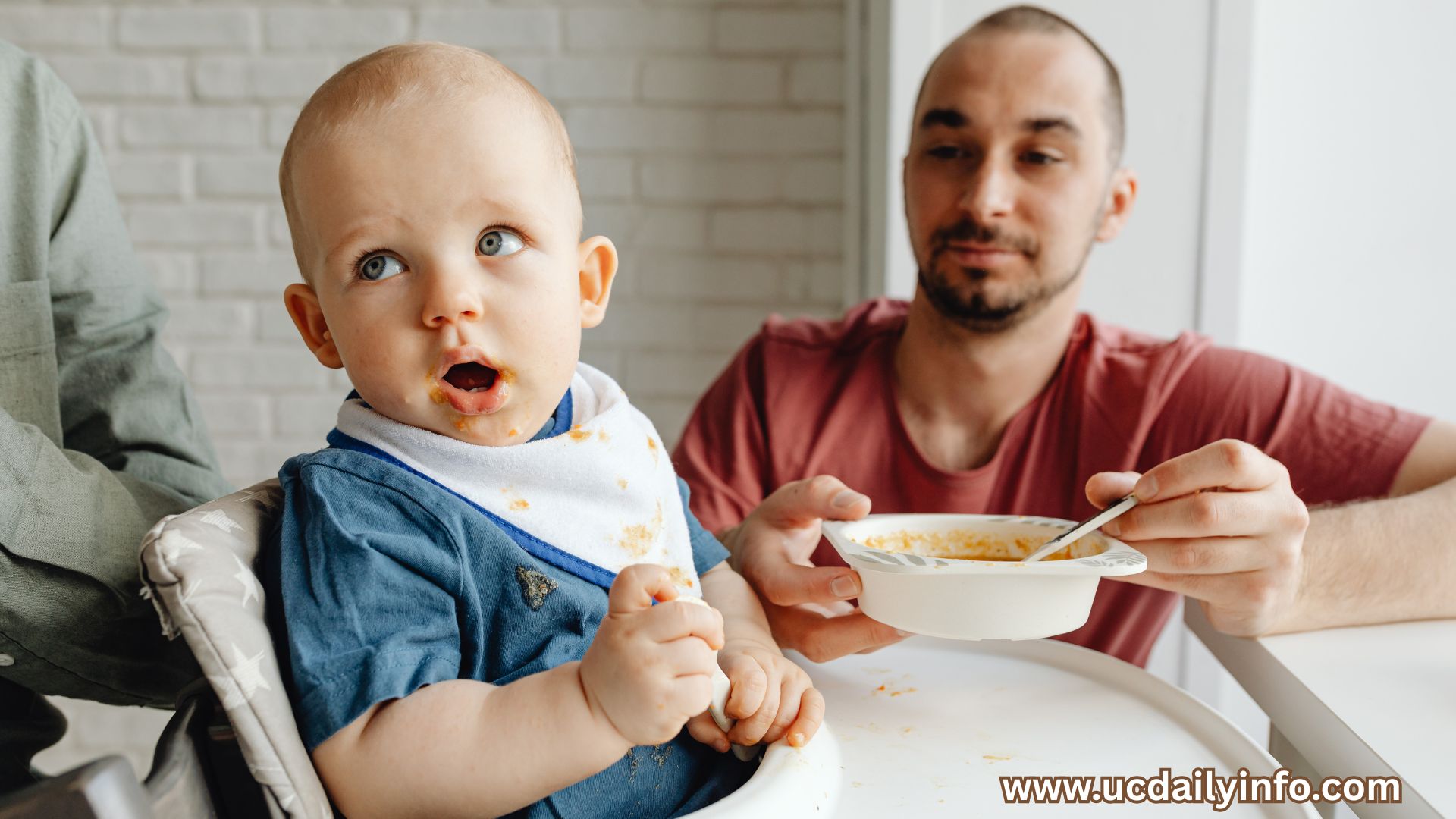
How to Start Solid Foods the Easy Way
Thank you for reading this post, don't forget to subscribe!
Starting solid foods is a big milestone for your baby, and it can feel exciting and scary at the same time. Many parents worry about choking, food allergies, or doing it the “wrong” way. The good news is this, starting solids can be easy, calm, and enjoyable when you follow simple steps.
This guide will walk you through when to start, what foods to offer, and how to keep it stress-free, even if you are a first-time parent.
When Is Your Baby Ready for Solid Foods? (How to Start Solid Foods the Easy Way)
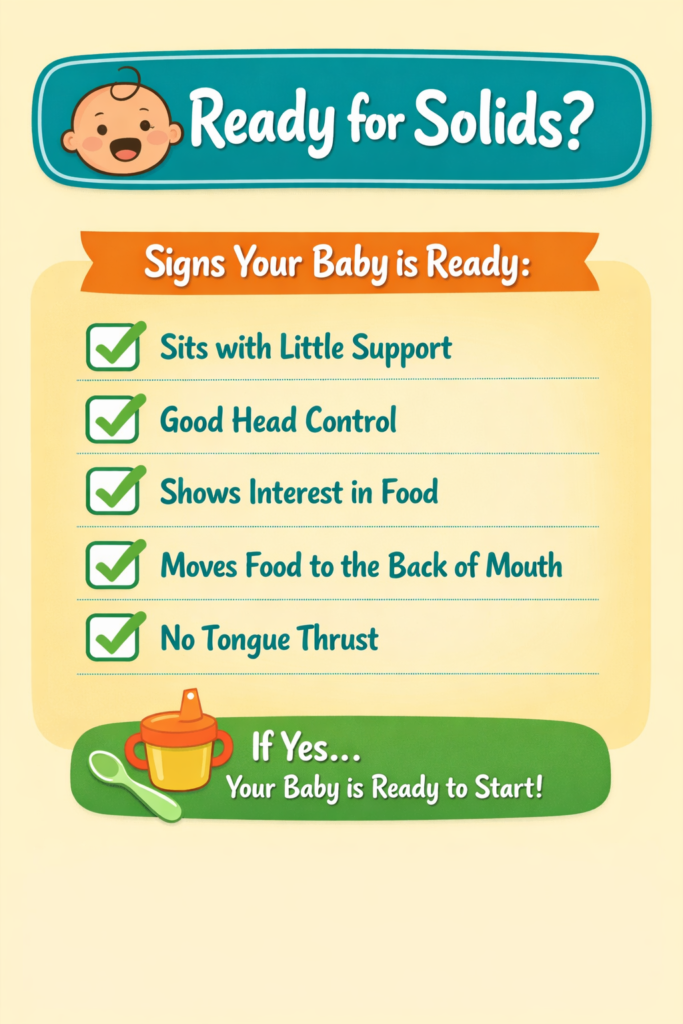
Most babies are ready to start solid foods around 6 months old. Age alone is not enough, so look for these readiness signs.
- Baby can sit with little support
- Baby has good head and neck control
- Baby shows interest in food, and watches you eat
- Baby opens their mouth when food is offered
- Baby no longer pushes food out with their tongue
If your baby is not showing these signs yet, it is okay to wait. Every baby grows at their own pace.
What Foods Should You Start With? (How to Start Solid Foods the Easy Way)
The best first foods are soft, simple, and easy to digest. You do not need fancy meals or expensive baby food.
Great first food options include,
- Mashed banana
- Pureed avocado
- Cooked and mashed sweet potato
- Pureed carrot or pumpkin
- Baby cereal mixed with breast milk or formula
Offer one food at a time, and wait 2 to 3 days before introducing a new food. This helps you notice any allergies or reactions.
How Much Food Should You Give? (How to Start Solid Foods the Easy Way)
At the beginning, solids are just for practice. Breast milk or formula is still your baby’s main food.
- Start with 1 to 2 teaspoons
- Feed once a day
- Slowly increase the amount as baby shows interest
Do not force your baby to eat. If they turn their head away or close their mouth, they are done.
Spoon Feeding or Baby-Led Weaning?
There is no single “best” method. You can choose what works for your family.
Spoon Feeding
- Parent feeds smooth purees
- Easier to control texture
- Less mess at the start
Baby-Led Weaning
- Baby feeds themselves soft finger foods
- Encourages independence
- Can be messier, but fun
Some parents use both methods, and that is perfectly okay.
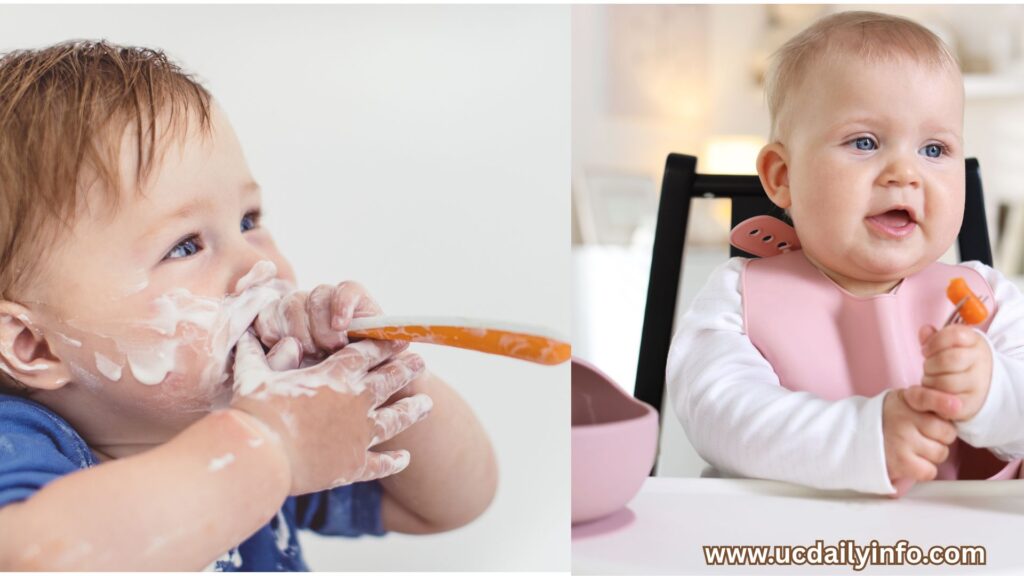
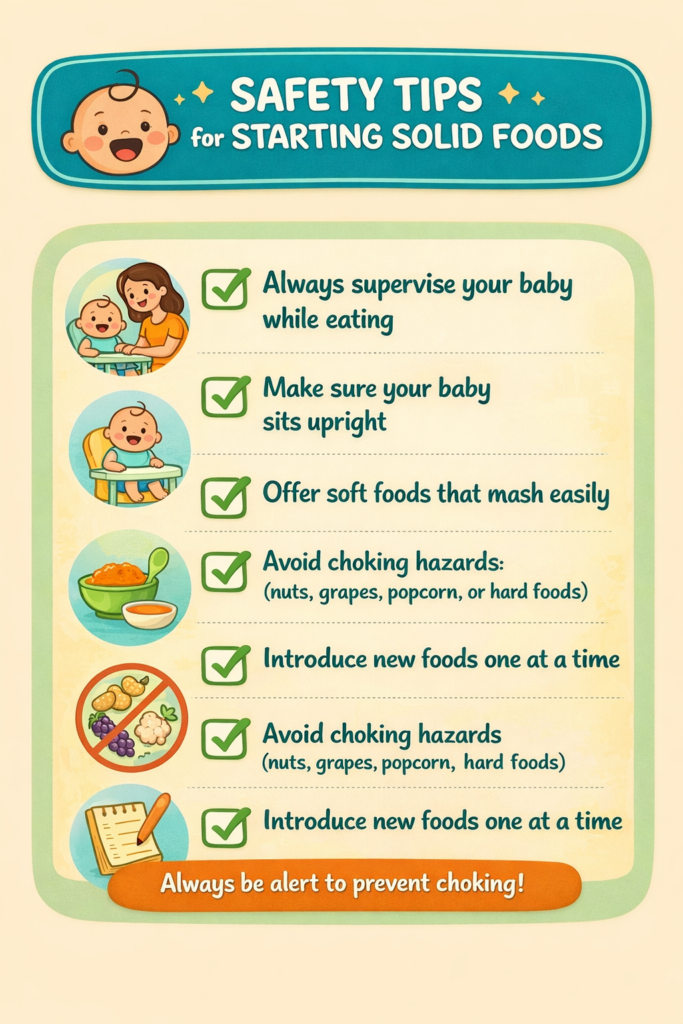
Safety Tips for Starting Solids (How to Start Solid Foods the Easy Way)
Safety is very important when introducing food.
- Always sit your baby upright
- Never leave baby alone while eating
- Avoid hard foods like nuts, popcorn, or grapes
- Cut food into small, soft pieces
- Stay calm, gagging is normal, choking is not
Learning CPR for babies is also a great idea for peace of mind.
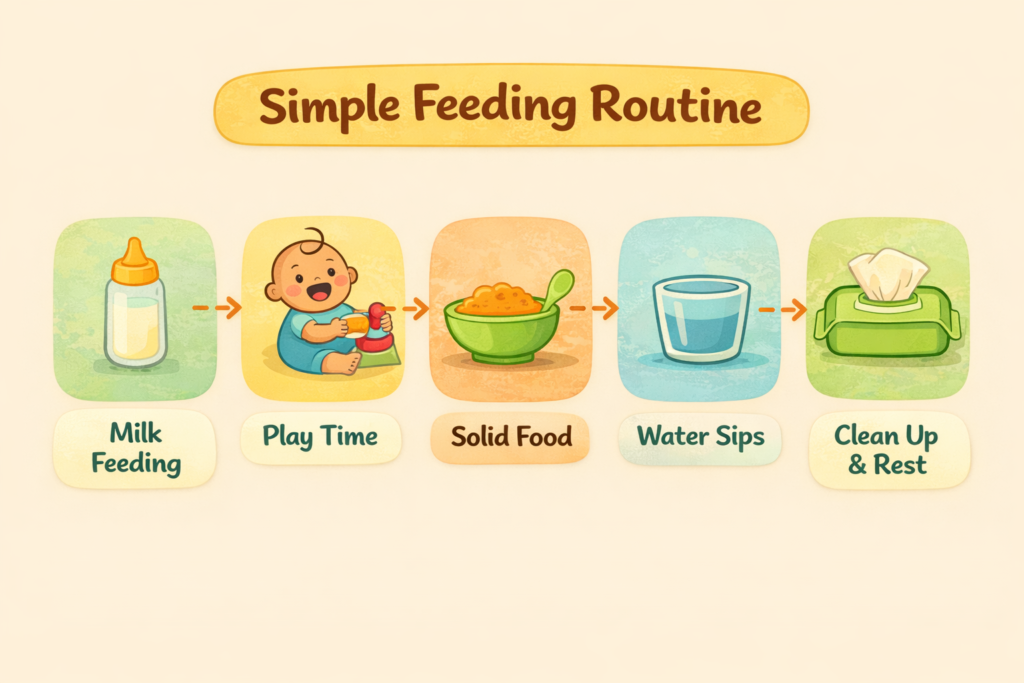
How to Create a Simple Feeding Routine
A routine helps your baby know what to expect.
Example routine,
- Milk feeding
- Short play time
- Solid food meal
- Water sips
- Clean up and rest
Start slow, and stay flexible. Some days your baby will eat more, some days less, and that is normal.
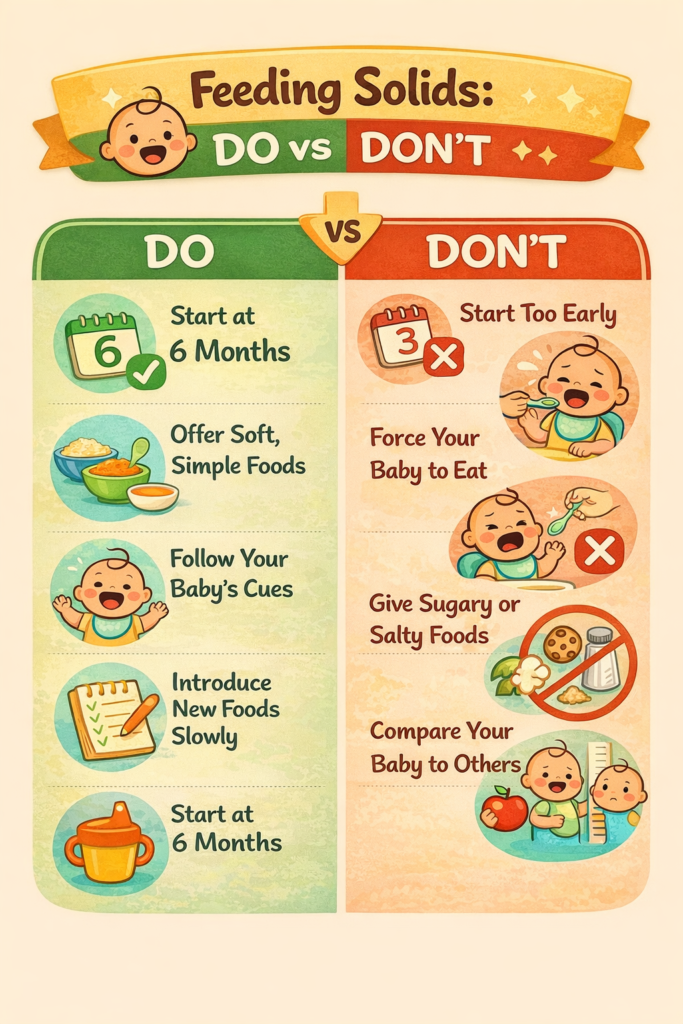
Common Mistakes to Avoid
Many parents worry too much at the start. Try to avoid these common mistakes.
- Comparing your baby to others
- Rushing textures too fast
- Forcing bites
- Offering too many foods at once
- Expecting full meals immediately
Remember, learning to eat is a skill, and skills take time.
How to Start Solid Foods the Easy Way
Starting solid foods does not have to be stressful. Keep foods simple, follow your baby’s cues, and enjoy this new stage together. Some days will be messy, some days will be amazing, and all of it is part of learning.
You are doing great, one spoon at a time ❤️
YOU MAY ALSO LIKE;
Fun Christmas Baking Ideas to Try with Your Kids
Best Baby Feeding Tips for Busy Moms
Smart Ways to Save Money as a New Parent