How the American School System Works for Parents
Understanding the American school system can feel confusing, especially for new parents or families moving to the U.S. School terms, grade levels, and rules may be different from what you’re used to.
This simple guide breaks everything down so you know what to expect, how schools are structured, and how to support your child at every stage.
1. The Structure of the American School System
The U.S. school system is generally divided into four main stages, based on age and grade level.
Preschool (Ages 3–5)
Preschool is optional and focuses on early learning through play. Children learn basic skills like sharing, listening, letters, numbers, and routines.
Elementary School (Grades K–5)
- Kindergarten starts around age 5
- Focuses on reading, writing, math, science, and social skills
- One main teacher for most subjects
Middle School (Grades 6–8)
- Students move between different teachers
- Introduces more responsibility and independence
- Covers advanced math, science, history, and electives
High School (Grades 9–12)
- Students earn credits toward graduation
- Includes core subjects and electives
- Ends with a high school diploma
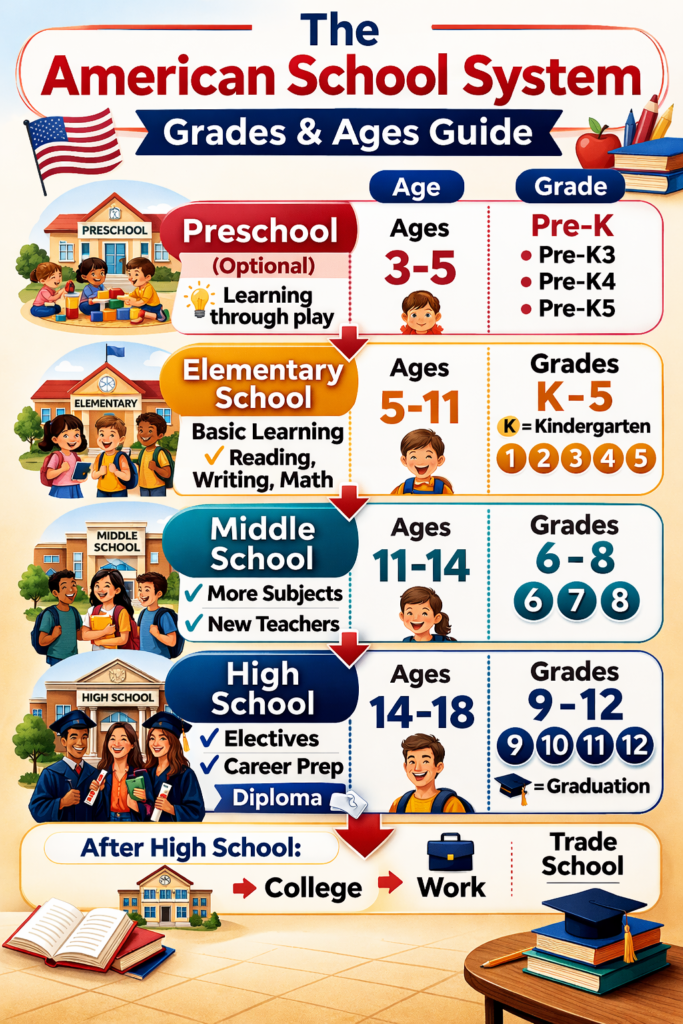
A vertical chart showing Preschool → Elementary → Middle → High School with ages and grade numbers.
2. Public vs Private vs Charter Schools
Parents in the U.S. usually choose between three main types of schools.
Public Schools (How the American School System Works for Parents)
- Funded by the government
- Free to attend
- Assigned based on your home address (school district)
Private Schools (How the American School System Works for Parents)
- Charge tuition
- May be religious or independent
- Smaller class sizes in some cases
Charter Schools (How the American School System Works for Parents)
- Publicly funded but independently run
- Often require applications or lotteries
- May focus on special programs (STEM, arts, language)
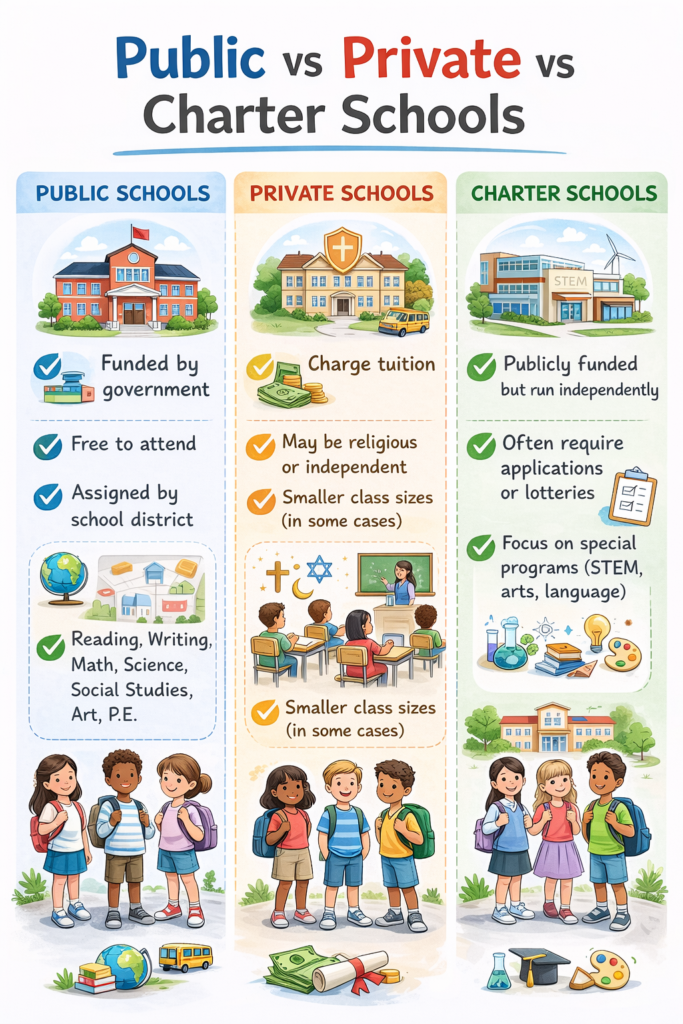
A side-by-side comparison graphic with icons for public, private, and charter schools.
3. What Is a School District?
A school district is a local area that manages public schools. Your home address usually decides which public school your child attends.
School districts control:
- School boundaries
- Academic calendars
- Transportation (school buses)
- School policies
Before enrolling, parents should check:
- School ratings
- Test scores
- Student-teacher ratios
- Parent reviews
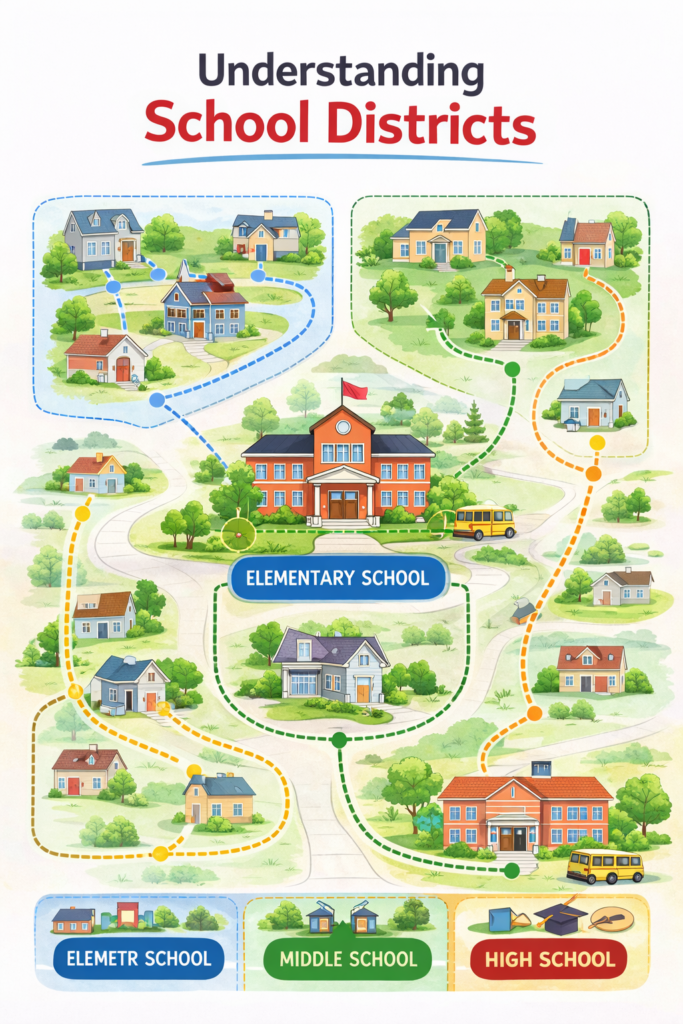
A neighborhood map showing houses linked to assigned schools.
4. The School Year and Daily Schedule
Most U.S. schools follow a traditional school year:
- Starts: August or September
- Ends: May or June
- Breaks: Winter break, spring break, holidays
A Typical School Day (How the American School System Works for Parents)
- Starts around 8:00–9:00 AM
- Ends around 2:30–4:00 PM
- Includes lunch and short breaks
Some districts offer:
- Before-school programs
- After-school care
- Extracurricular activities
A daily timeline graphic showing class time, lunch, recess, and dismissal.
-
🕗 8:00 AM – Arrival / Morning Routine
-
📚 8:30 AM – Class Time (Reading & Math)
-
🍎 12:00 PM – Lunch Break
-
🏃 12:30 PM – Recess
-
🧪 1:00 PM – Afternoon Classes (Science / Art)
-
🎒 3:00 PM – Dismissal
Daily_School_Timeline_Printable
Daily_School_Timeline_Colorful_With_Icons
5. Curriculum and Subjects Taught
American schools follow state-approved standards, but teaching styles may vary.
Common subjects include:
- English / Language Arts
- Mathematics
- Science
- Social Studies (History & Civics)
- Physical Education
- Art and Music
High school students may also take:
- Foreign languages
- Technology classes
- Career or college prep courses
Standardized testing is used to track progress, especially in public schools.
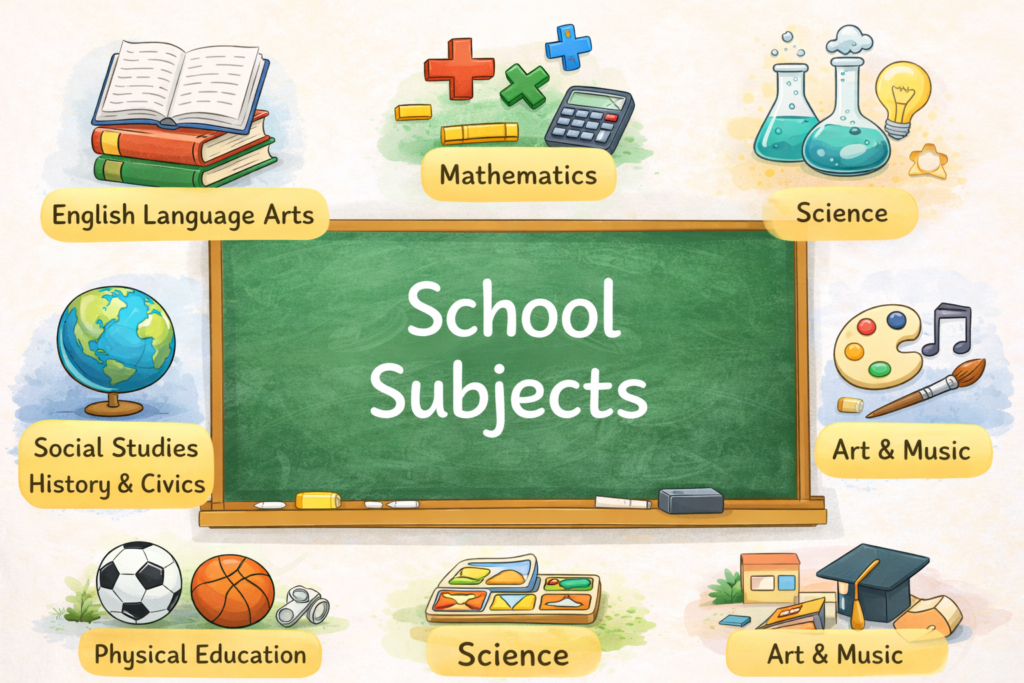
A classroom board illustration with subject icons around it.
6. How Grading and Progress Work
Grades are usually given as letters:
- A = Excellent
- B = Good
- C = Average
- D = Below Average
- F = Failing
Teachers also use:
- Homework
- Class participation
- Projects
- Tests and quizzes
Parents receive:
- Report cards (every term)
- Progress reports
- Teacher feedback
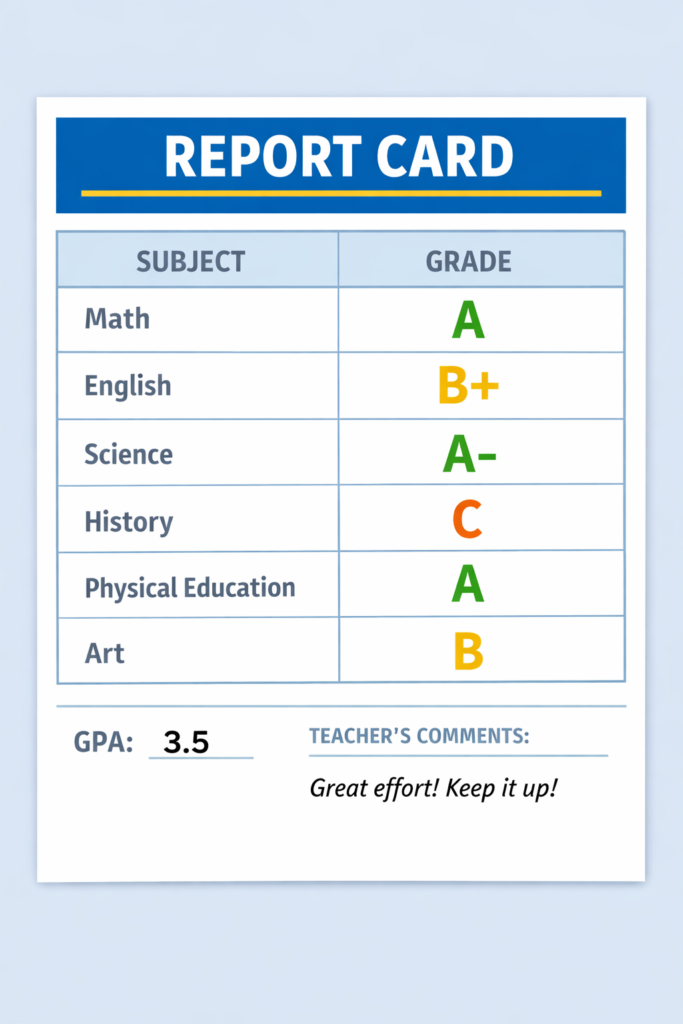
A sample report card graphic with letter grades.
7. Parent Involvement in U.S. Schools (How the American School System Works for Parents)
Parent involvement is strongly encouraged in American schools.
Ways parents stay involved:
- Parent-teacher conferences
- School emails and apps
- Volunteering
- PTA or PTO meetings
Schools expect parents to:
- Check homework
- Communicate with teachers
- Support learning at home

A parent and teacher talking at a school desk with a child nearby.
8. Support Services and Special Programs (How the American School System Works for Parents)
Many schools offer extra support such as:
- Special education services
- English language learning (ELL) programs
- School counselors
- Free or reduced lunch programs
These services help ensure every child has access to learning, regardless of background.

Icons showing support: speech bubble, heart, book, and helping hands.
Final Thoughts for Parents (How the American School System Works for Parents)
The American school system may seem complex at first, but once you understand the structure, it becomes much easier to navigate.
The key is to:
- Know your school options
- Stay involved
- Communicate with teachers
- Support your child at home
With the right information, you can confidently guide your child through every stage of their education