
Simple Baby Sleep Routine That Works
Thank you for reading this post, don't forget to subscribe!Getting your baby to sleep well can feel like one of the hardest parts of parenting. Many new moms and dads struggle with bedtime battles, short naps, and constant night waking.
The truth is most babies don’t sleep well by accident. Good sleep usually happens because of a simple, consistent routine.
The good news? You don’t need complicated methods or strict schedules. A gentle and simple baby sleep routine can make a huge difference.
In this post, you will learn:
- Why routines help babies sleep better
- How to create an easy bedtime routine
- Step-by-step examples you can follow
- Simple tips that really work
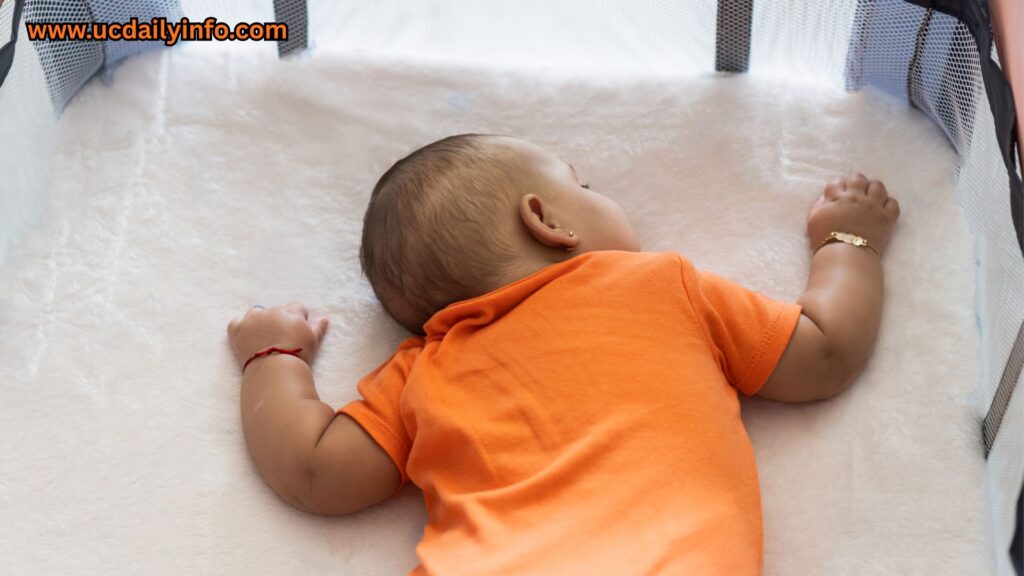
Why Babies Need a Sleep Routine
Babies thrive on predictability. When they know what to expect, they feel safe and secure.
A consistent sleep routine helps your baby:
- Fall asleep faster
- Sleep longer at night
- Cry less at bedtime
- Develop healthy sleep habits
Routines also help parents feel more in control and less stressed.
Even very young babies respond well to simple patterns like bath → feed → sleep.

Signs Your Baby Is Ready for Sleep
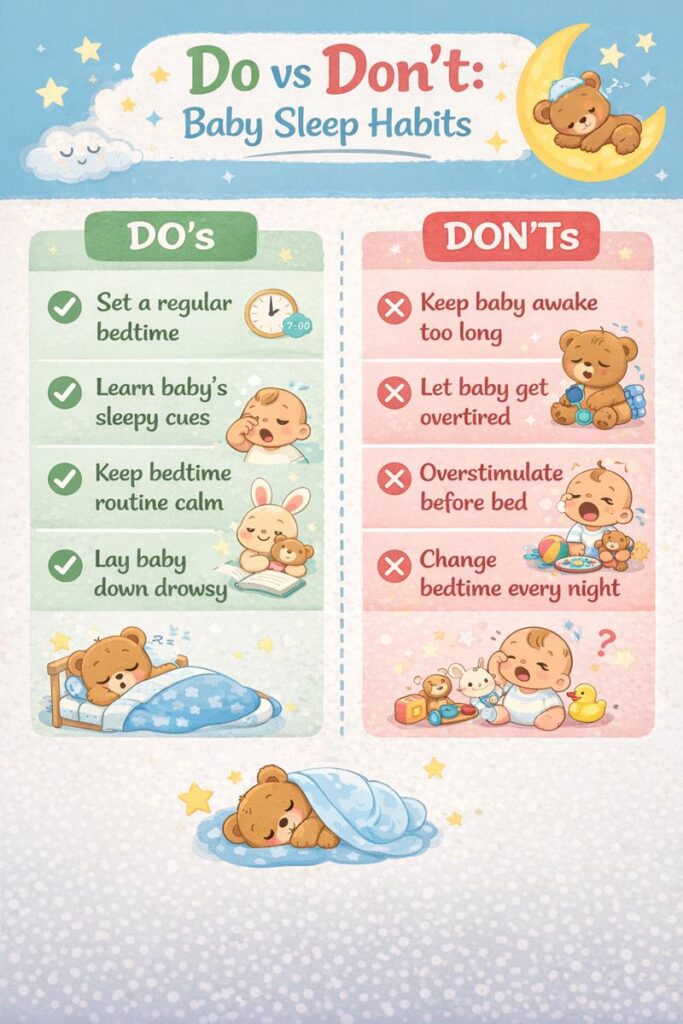
One of the biggest mistakes parents make is waiting too long to put baby to bed.
Watch for sleepy cues such as:
- Rubbing eyes
- Yawning
- Fussiness
- Staring into space
- Slower movements
When you notice these signs, it’s the perfect time to start the sleep routine.
If you miss this window, your baby can become overtired and harder to settle.



The Key Elements of a Simple Baby Sleep Routine
A good baby sleep routine doesn’t need to be long or complicated.
The best routines are:
- Calm
- Short
- Consistent
- Easy to repeat
Basic elements include:
- Quiet time
- Feeding
- Clean diaper
- Soft music or story
- Putting baby down drowsy
Keep the same order every night so your baby learns:
This means it’s time to sleep.
Simple Baby Sleep Routine That Works
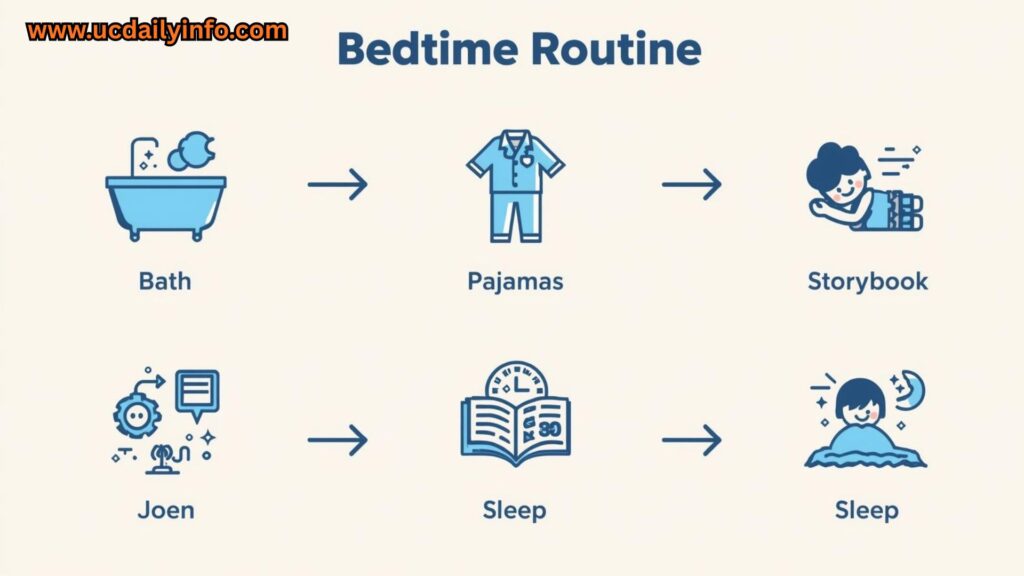
Step-by-Step Example of an Evening Sleep Routine
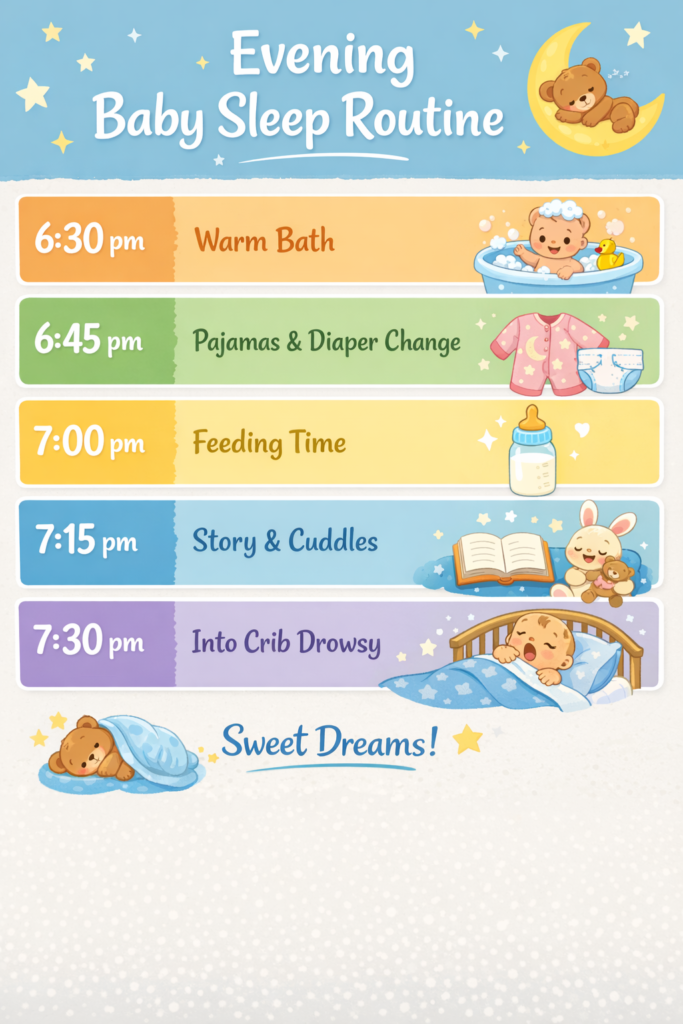
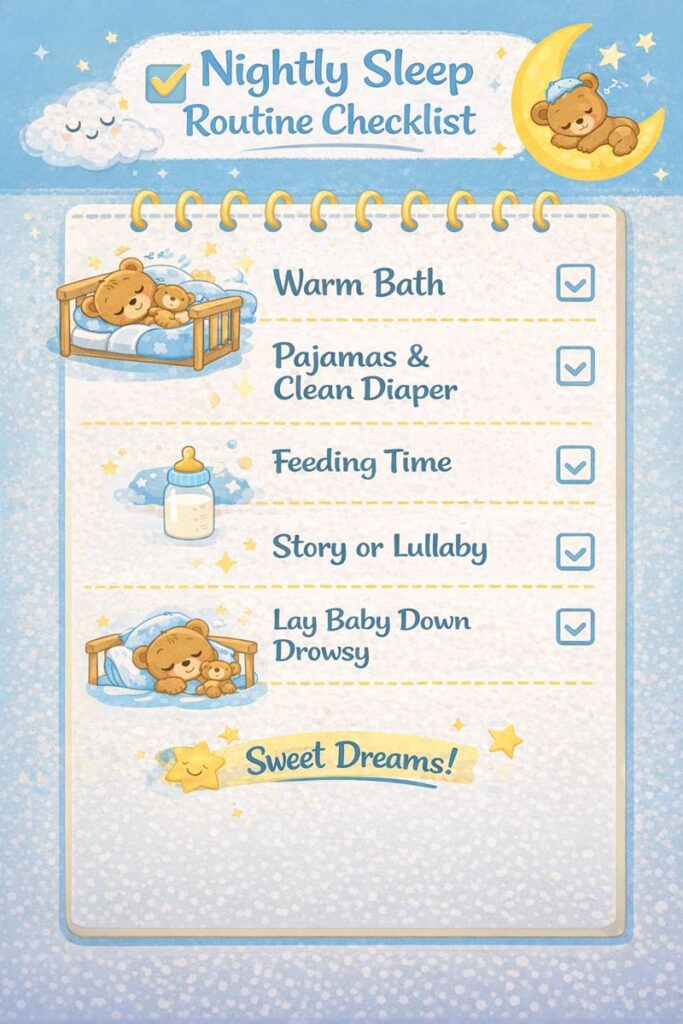
Here is an example of a simple routine that works well for many families:
- 6:30 pm – Warm bath
- 6:45 pm – Pajamas and diaper change
- 7:00 pm – Feeding time
- 7:15 pm – Cuddle, lullaby, or short story
- 7:30 pm – Put baby in crib awake but drowsy
This routine is calm, predictable, and easy to follow every day.
Simple Baby Sleep Routine That Works
Daytime Routine and Naps
Night sleep and daytime naps are closely connected.
If your baby skips naps or goes to bed overtired, nighttime sleep will suffer.
Create a simple nap routine such as:
- Diaper change
- Dim lights
- Short cuddle
- Lay baby down
Even a 5-minute mini routine before naps helps your baby settle faster.
Simple Baby Sleep Routine That Works
Creating the Perfect Sleep Environment
Your baby’s sleep space matters a lot.
To encourage good sleep:
- Keep the room dark
- Use white noise
- Maintain cool temperature
- Use comfortable sleepwear
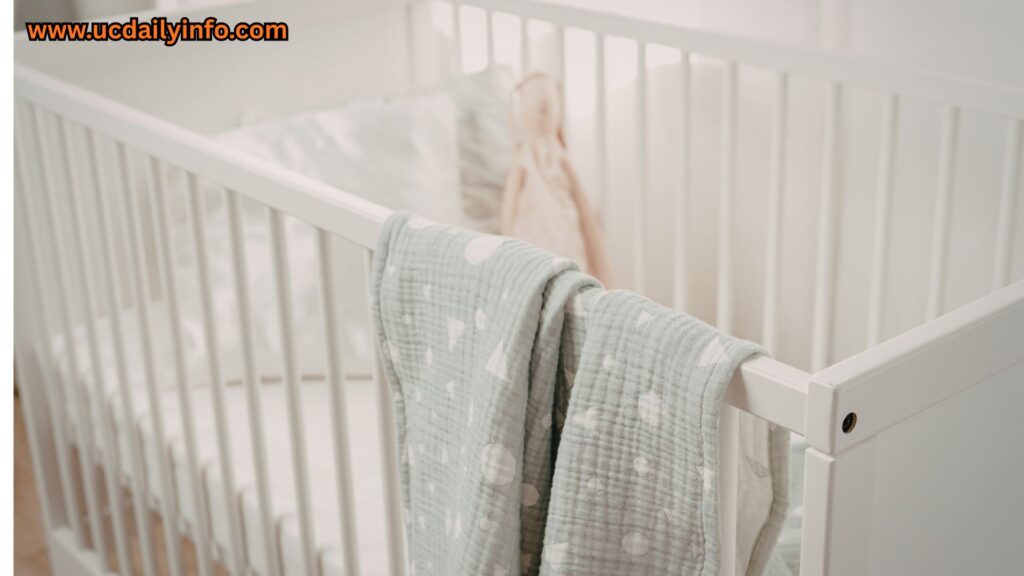
- Keep the crib safe and simple
A calm environment tells your baby’s brain that it’s time to rest.
Common Baby Sleep Mistakes to Avoid
Many parents unknowingly create habits that hurt sleep.
Avoid these common mistakes:
- Keeping baby awake too long
- Changing bedtime every night
- Too much stimulation before bed
- Relying on rocking or feeding to sleep every time
Small changes can quickly improve your baby’s sleep.
How to Stay Consistent
Consistency is the real secret to success.
Tips to stay on track:
- Do the routine at the same time daily
- Keep steps in the same order
- Let all caregivers follow the same routine
- Be patient – routines take time
Most babies adjust within 1–2 weeks.
Sample Sleep Schedules by Age (Simple Baby Sleep Routine That Works)
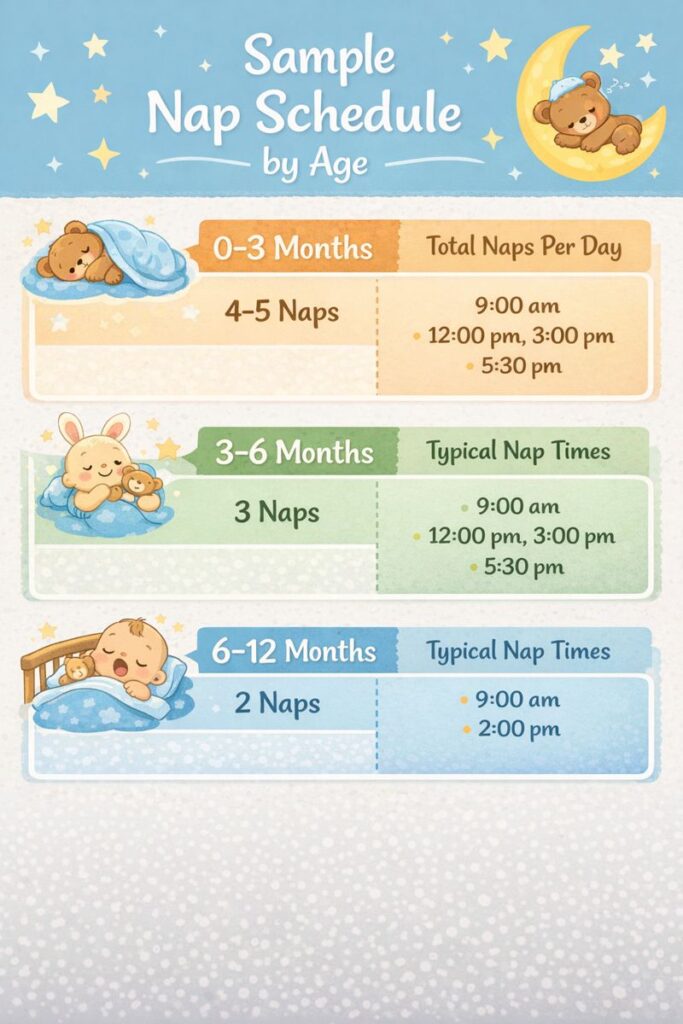
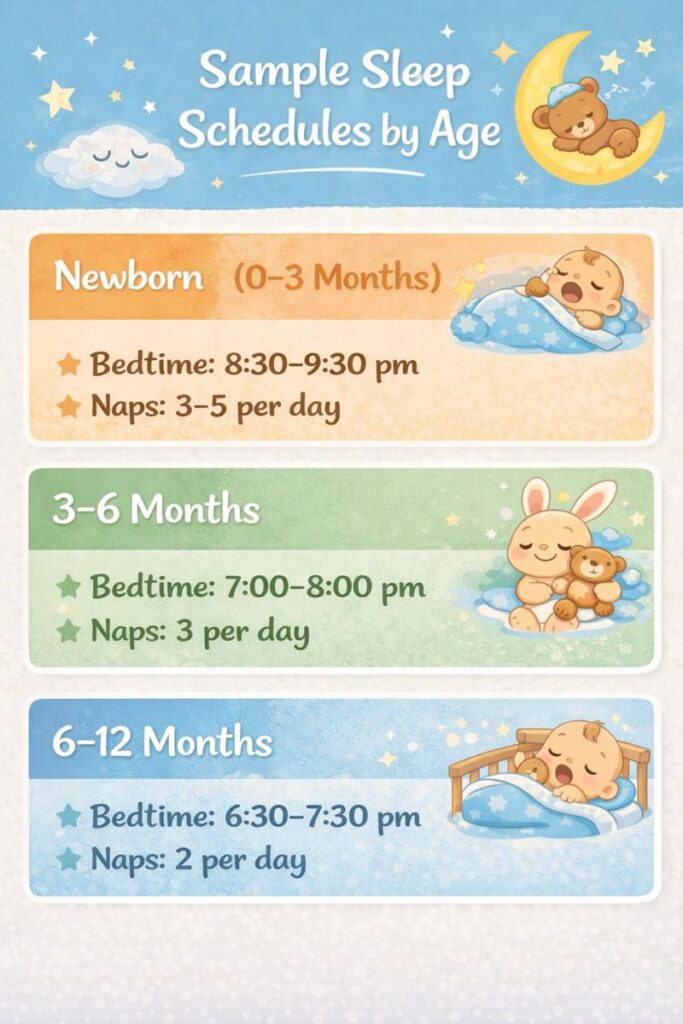
Every stage is different. Here are simple examples:
Newborn (0–3 months):
- Bedtime: 8:30–9:30 pm
- 3–5 naps per day
3–6 months:
- Bedtime: 7:00–8:00 pm
- 3 naps per day
6–12 months:
- Bedtime: 6:30–7:30 pm
- 2 naps per day
Use these as guides, not strict rules.
What to Do When the Routine Stops Working (Simple Baby Sleep Routine That Works)
Sometimes sleep gets worse due to:
- Teething
- Growth spurts
- Illness
- Sleep regressions
When this happens:
- Stay calm
- Stick to the routine
- Offer extra comfort
- Return to normal routine as soon as possible
Most sleep disruptions are temporary.
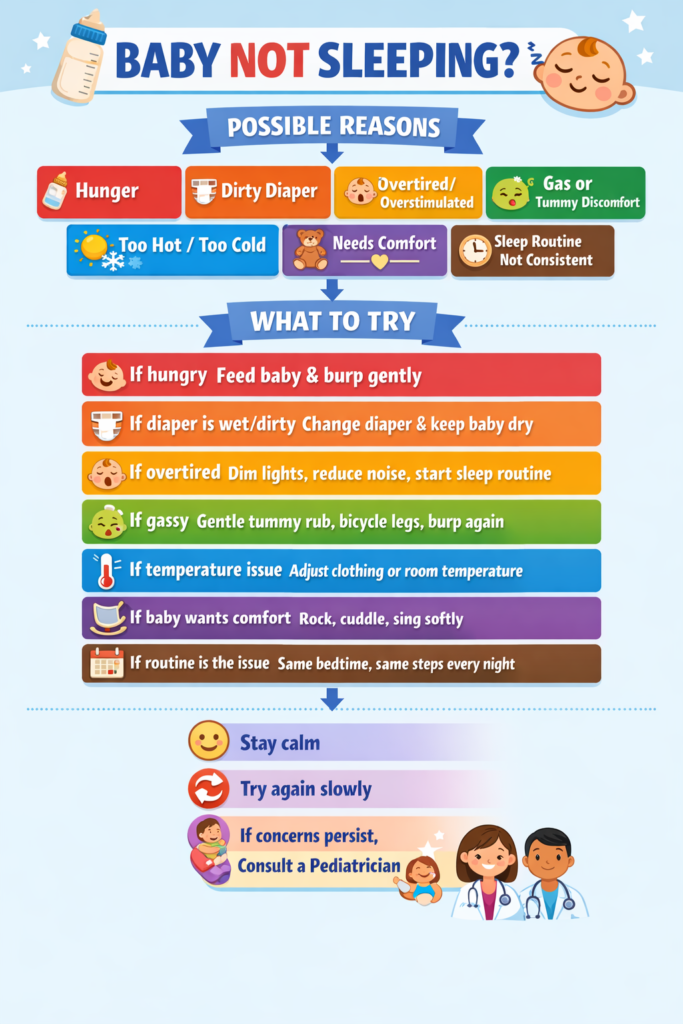
Simple Baby Sleep Routine That Works (Simple Baby Sleep Routine That Works)
Creating a simple baby sleep routine is one of the best gifts you can give your child—and yourself.
You don’t need perfection.
You just need consistency.
Start small, stay patient, and remember: better sleep is possible.